
My memory of Arusha was a bustling bus depot as my twin sister and I backpacked from Dar es Salaam to Nairobi. I’d woken to a view of Kilimanjaro as I opened the door of my cheap hotel room – a view that still holds firm in my mind – after an impromptu stop in Moshi the night before. Then it was back on a bus and onward north with a budget that didn’t stretch to the tours of Tanzania’s Serengeti or Ngorongoro Crater. Thirty-two years later and regrettably they remain on the to-do list!
I was reminded of Arusha as I read the history of CITES.
It was at the IUCN’s Arusha Conference on Conservation in Modern African States in 1961 that Tanganyika’s Prime Minister (who shortly after became the first President of the United Republic of Tanzania), Julius Nyerere delivered the Arusha Manifesto:
“The survival of our wildlife is of grave concern to all of us in Africa. These wild creatures amid the wild places they inhabit are not only important as a source of wonder and inspiration but are an integral part of our natural resources and of our future livelihood and wellbeing.
In accepting the trusteeship of our wildlife we solemnly declare that we will do everything in our power to make sure that our children’s grandchildren will be able to enjoy this rich and precious inheritance.
The conservation of wildlife and wild places calls for specialist knowledge, trained manpower and money and we look to other nations to co-operate in this important task – the success or failure of which not only affects the Continent of Africa but the rest of the world as well.”
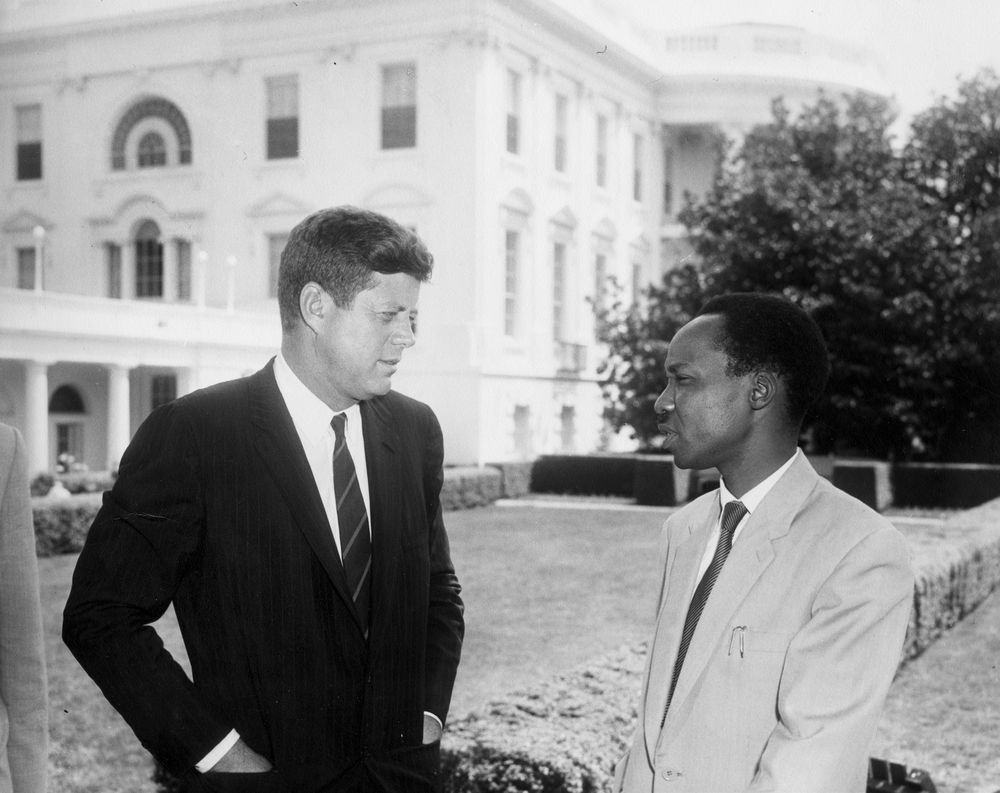
From this manifesto, 65 years ago, I jotted down a short checklist of what Nyerere had listed, in his 3-paragraph call to arms, as key to ensuring that wildlife in Tanzania and Africa was not lost to future generations.
- “Do everything in our power” – this I can safely say we are not doing. FAIL
- Specialist knowledge – there is no shortage of this in the modern world compared to what would have been on hand in 1961. Science is not static, it is always evolving. However, science reflects the best knowledge we have in the moment. As the saying goes, the more you know the more you know you don’t know! Taking this a step further, then if we don’t know it would seem wise to observe the precautionary principle until we do. This is enshrined as Principle 15 of the 1992 Rio Earth Summit’s Rio Declaration, which dictates that, “where threats of serious or irreversible damage exist a lack of full scientific certainty shall not be used as a reason for postponing cost-effective measures to prevent environmental degradation.” It emphasizes proactive, preventative action over remediation, shifting the burden of proof to proponents of potentially harmful activities. Overall though we know enough if we listen to the evidence and make evidence-based decisions. PASS
- Trained manpower – certainly there are many people trained as custodians of National Parks and nature reserves but are they well enough trained, well enough resourced and are there enough boots on the ground? If we include the training of mankind – that is the public’s true understanding of the issues of conservation, then I think we could argue that we can push this mark to a fail. FAIL
- Money – amazingly, all those years ago, funding for conservation was noted as a need. Yet 65 years later I think we would all agree that conservation and environment remain woefully underfunded and undervalued. Nature is still seen as a resource to be harnessed rather than an asset to be valued. One we can’t live without. FAIL
- International co-operation – my impression of the conservation sector is that it remains fragmented, disjointed and often driven by ego. Yes, the 1961 manifesto and conference spawned collaborations such as CITES – a significant act of co-operation but is CITES really achieving its mandate? CITES states its objective is to protect endangered species from overexploitation through trade. On that basis – for meaningful effective international co-operation – FAIL
So, after more than six decades I can only confidently say that we have ticked off one of the five key needs identified by Nyerere. A sobering thought that we are meeting just 20% of Nyerere’s KPIs identified sixty-five years ago and still relevant today.
More sobering is to consider the decimation of much of Africa’s wildlife (and globally) that has occurred since the manifesto was delivered. WWF’s Living Planet Report 2024 confirms that in the 50 years from 1970 to 2020 (roughly the time since the Arusha Convention) Africa’s monitored wildlife populations have declined by 76%, the world on average by 73%, with the worst being Latin America and the Caribbean at 95%. You can’t help wondering what has happened to the unmonitored wildlife populations! Astonishing figures considering the problems were already being discussed in 1965! It would seem our 20% exam result is going to mean major biodiversity loss for the planet.
Unless………Unless what? Unless we acknowledge the failures of the past half century to act on Nyerere’s points, we will continue to go backwards. While protecting what is left can still (and must) be done, it will now require more effort, more investment, greater pain and more willpower than sixty-five years ago.
A young vet nurse told me recently the world’s problems are too big to tackle – or words to that effect. I disagree.
Young people must challenge the status quo: choose what they care about, be curious and learn deeply about that subject, and question why things aren’t better. Assess whether progress is real and sufficient—if not, plan for and keep demanding change. Inaction solves nothing. Collective, coordinated effort to challenge the status quo creates impact beyond individual actions. I will call this the Alice Effect.
The fact that young people working in conservation are anxious and stressed is being discussed more regularly. This was covered again in a recent Mongabay article which identified low funding and pay, and the fact they have a front seat to, “watching ecological destruction in real time” as key factors.
Funding can be fixed and I will come to one of these shortly. However, if these same young people invoked the Alice Effect, then I can imagine a different scenario. The reason they watch the destruction of their natural world is because they are indoctrinated into a system that has enabled it, not challenged it; employed by organisations trying to create the illusion that the status quo is working.
My concern is the growing number of networks for early career conservationists, for example the CITES Global Youth Network launched in 2024, who are being trained on strategies that haven’t worked by people who still somehow believe in the current system, so perpetuating the status quo.
The Alice Effect needs these assumptions to be challenged, and a new approach taken by a new generation. I’ve said previously in a blog that, the definition of insanity is repeating the same action and expecting a different outcome. It’s also depressing and anxiety inducing!
Let’s then reflect more on the Arusha Conference. The CITES website states the following with regard the Arusha Conference – “It recognized that the efforts of the developing countries to control poaching could only be successful if the developed countries also took concerted action to control the demand for endangered wildlife and wildlife products.”
In addition to this observation, consider the opening address by Sir Richard Turnbull, the Governor of (then) Tanganyika. He acknowledged the value of the natural world, and that conservation of a countries wild animals was, “dependent upon one overring consideration – the conservation of the habitat.”
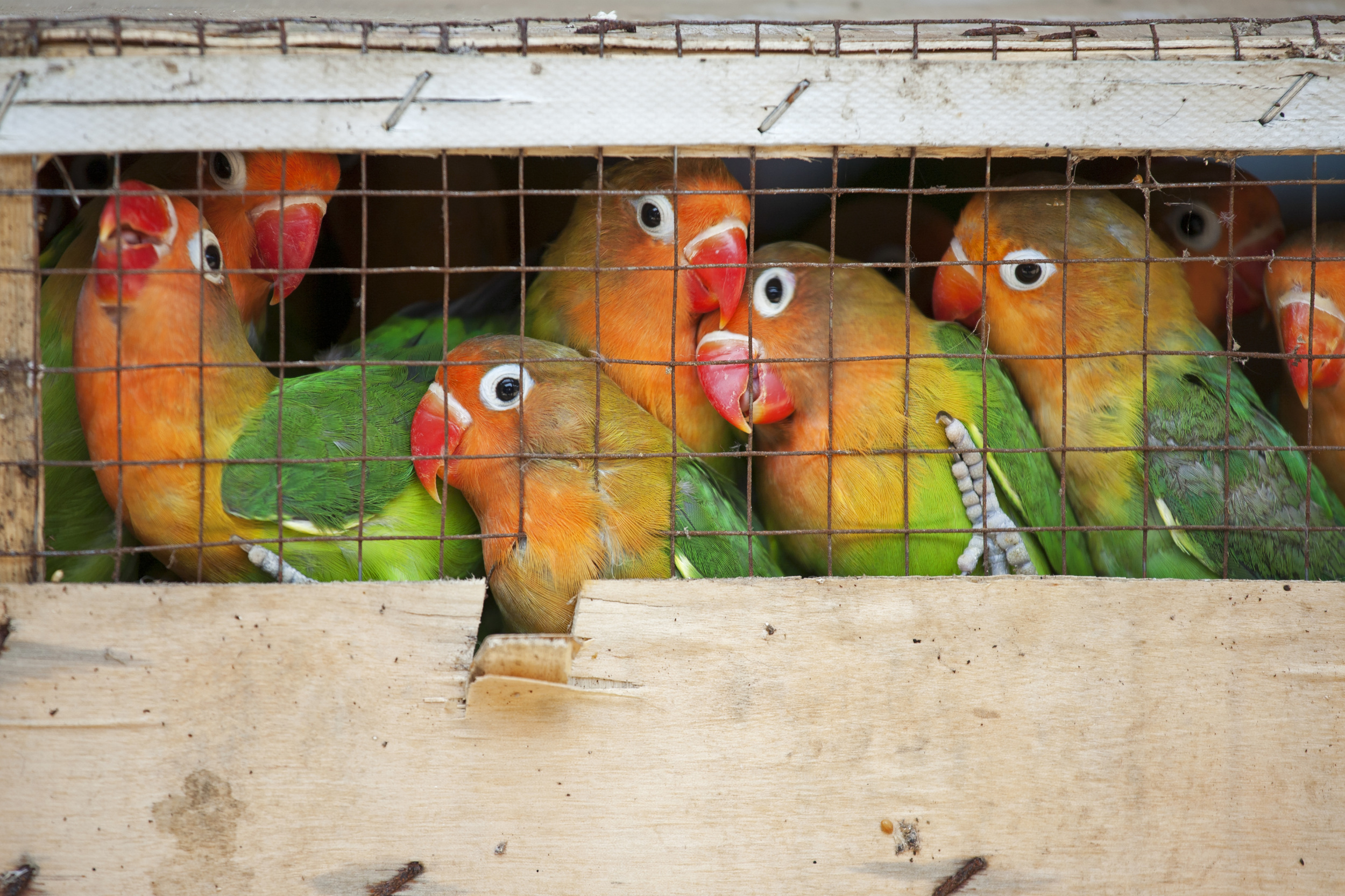
What do we take from these two observations? Trade and habitat destruction were identified as the main conservation problems in 1961. Indeed, the Arusha conference is considered ground zero in the creation of CITES.
It’s ironic then that the world was so amazed by the IPBES report of 2019 some 58 years later. This significant report highlighted that the biggest threat to terrestrial species was habitat loss and the second was, “direct exploitation,” (trade). It took us nearly 6 decades to produce what I have previously termed a groundbreaking report – not that groundbreaking it seems! We knew these problems three generations ago.
The lack of Alice Effect has seen two generations not called to account on the status quo and the scale of inertia of their generation’s conservation management.
The second key point to take from my reflections on the Arusha Convention is the issue of funding. Page 2 of the conference summary states that, “the biggest and most urgent world-wide conservation problem is a financial one. Conservation must command money.” Three generations later and once again the issue is unresolved.
This is an area that Nature Needs More has been lobbying to change. The key point is a shift to a profiter pays system – that is, those benefiting from the Business of Nature are made financially responsible for conserving the nature they are profiting from – in many cases huge profits.
At the Arusha conference, much was made of the fact that there is plenty of money available in the world if only it could be harnessed and directed to conservation. Essentially the conference advocated that philanthropic contributions to NGOs would be the answer. It stated, “It is neither poverty nor the lack of deep and keen sympathy with this cause that is preventing the flow of money. It is only the lack of the appropriate organization and spirited leadership …”
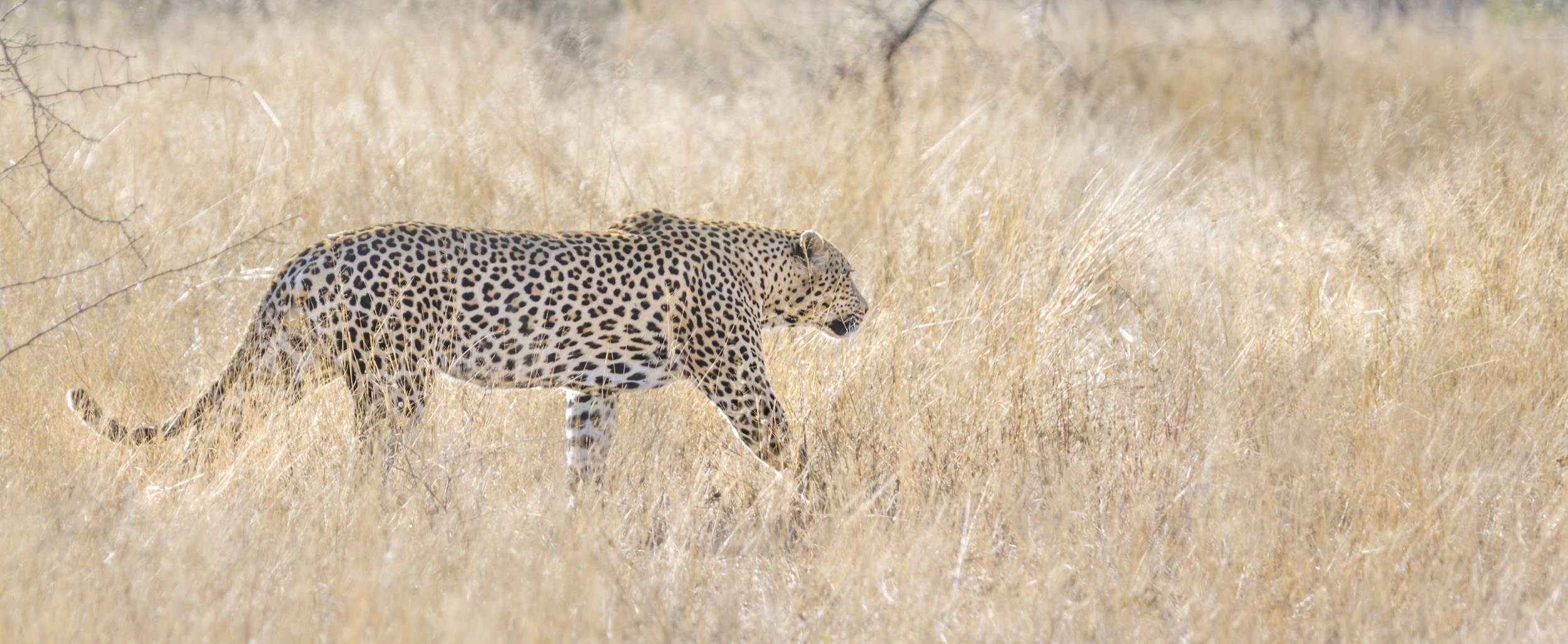
Much was made of the establishment of The World Wildlife Fund (now WWF) as a “new fuel tank with a new pump to fill and refill and refill,” conservation’s car. Indeed, the World Wildlife Fund, was conceived as an international fundraising organisation to support the work of existing conservation groups.
It’s ironic to think that earlier I quoted the WWF Living Planet Report 2024 highlighting the loss of 73% of the world’s wildlife populations pretty much since the same organization was established as the answer to the problems. This is akin to writing your own obituary!
Since the early 1960s three generations have tried to mine the philanthropy oil field to fill the conservation tank and have largely failed. Has it failed due to lack of willingness to donate or lack of leadership? It has failed as the model of relying on voluntary contributions by individuals, business, or discretionary government funding (think about the global withdrawal of USAID funding under the current US administration) will never work. Put simply, the model, the status quo, has failed.
The Alice Effect should now demand an honest reappraisal and reset. We must put a real price on consumption from our natural world. No phony solutions such as Nature Capital Markets (NCMs) (you can read a good article on this here) and no reliance on the whimsical generosity of donors and the political vagaries of government funding.
Rather it is time to develop a system that places an underlying value on biodiversity and ensure it is truly sustainably utilised. With regards to funding, then a price must be placed in the path of production and consumption that is non-negotiable and goes directly back to conservation. CITES listed trade offers a perfect starting point for this, recognizing it covers our most at risk species. At Nature Needs More we have outlined a model for this in Fixing the CITES Funding Crisis Through a Levy on Business. In a nutshell – a levy on trade at the consumption end fed back into conservation. Not voluntary but mandatory – challenging the, all profit no responsibility mindset.
In the end maybe a flat 1% levy on global trade is the easiest way to go. When we accept that our global economy and societies are totally dependent on the environment, then a 1% levy on the global wildlife trade hardly seems onerous. Global trade in 2025 reached a record high exceeding of US$35 trillion, with the global wildlife trade making up around $350-500 billion of that. So, a 1% levy would be substantial, addressing part of the massive funding shortfall. Redirecting environmentally damaging subsidies to conservation is another avenue to address the funding crisis.
At the Arusha conference, Professor Baer, then President of the IUCN said during the inaugural session, “Man in the past, out of sheer ignorance or greed, has wastefully destroyed plant and animal life, forgetting that neither he nor his children’s children can ever become completely independent of their environment, and overlooking the possible contribution that these now extinct forms might have made to his own welfare.”
Well, it is the generation of Professor Baer’s children’s children that must now exert the Alice Effect and demand that a world built on all profit, no responsibility is no longer an acceptable status quo. Conservation groups have buddied up with business chasing the philanthropy they need to exist, but this has meant three generations of failed conservation.
The Alices of this world demand and deserve better.
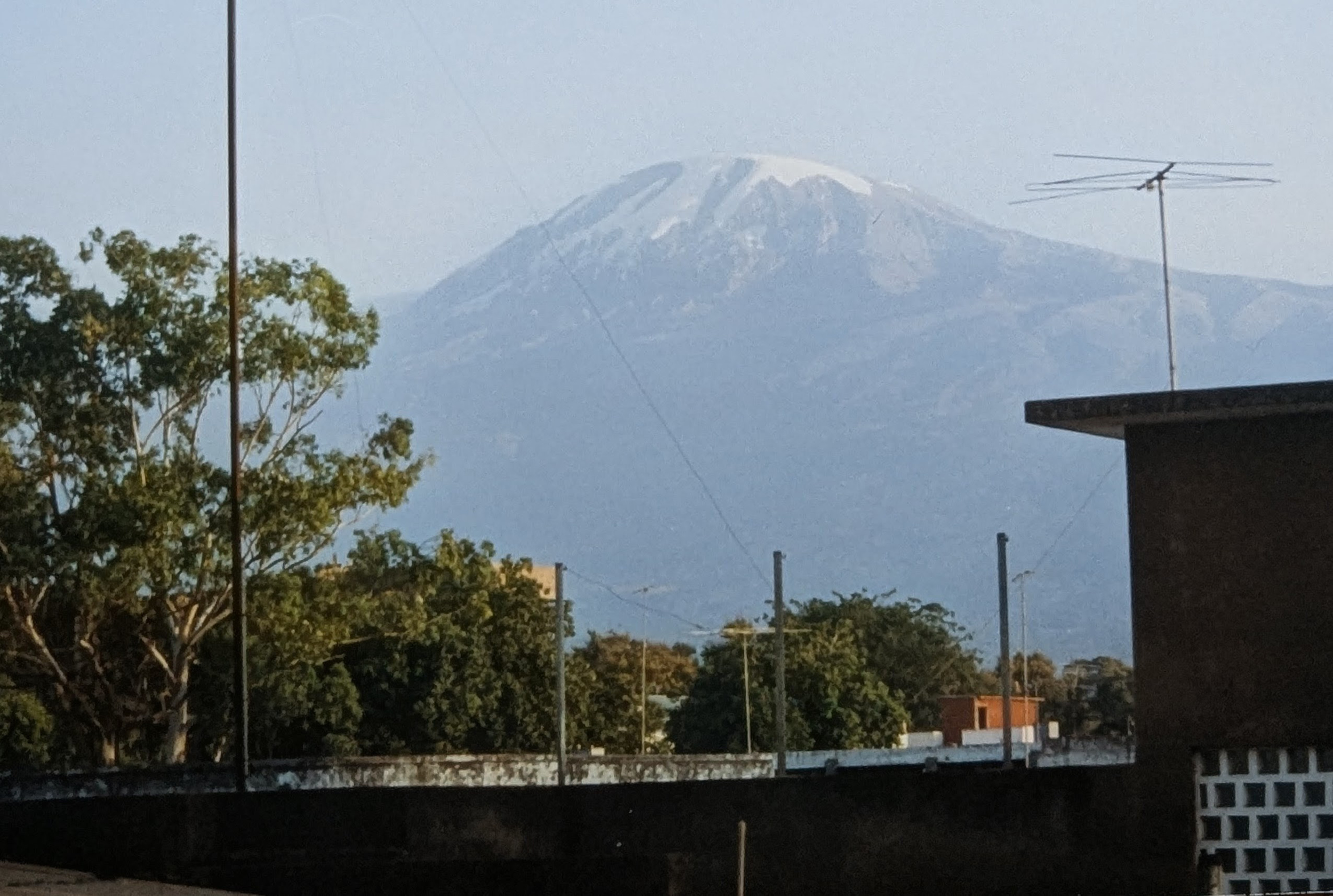
Looking at the image I took 32 years ago, from the open door of my cheap hotel room, my Arusha reflections sadly illustrate how little the world of conservation has progressed in 65 years. We continue to turn out reports of the same problems we had identified three generations ago and keep rinsing and repeating the same plans to address them.
Unless the Alice Effect grows to challenge the conservation status quo, I cannot see myself giving a PASS mark to the other 80% of Nyerere’s 5 key elements any time soon, or as some predict, before it is too late.