

For too long it has been too easy for business to say they are offering conservation organisations a seat at their advisory table to help them make informed policy decisions regarding their environmental impacts. Conservation must face the fact that all they have ever been offered is a highchair.
All this has created is a plethora of phantom solutions (offsets, credits, certifications, ESGs etc) and greenwashing to avoid the scale of government intervention needed to properly regulate the business of extraction of wild species for profit. These profits are being made by some of the wealthiest companies in the world, from luxury fashion and homewares to fragrances and pharmaceuticals. And let’s not forget all the problems of the exotic pet trade.
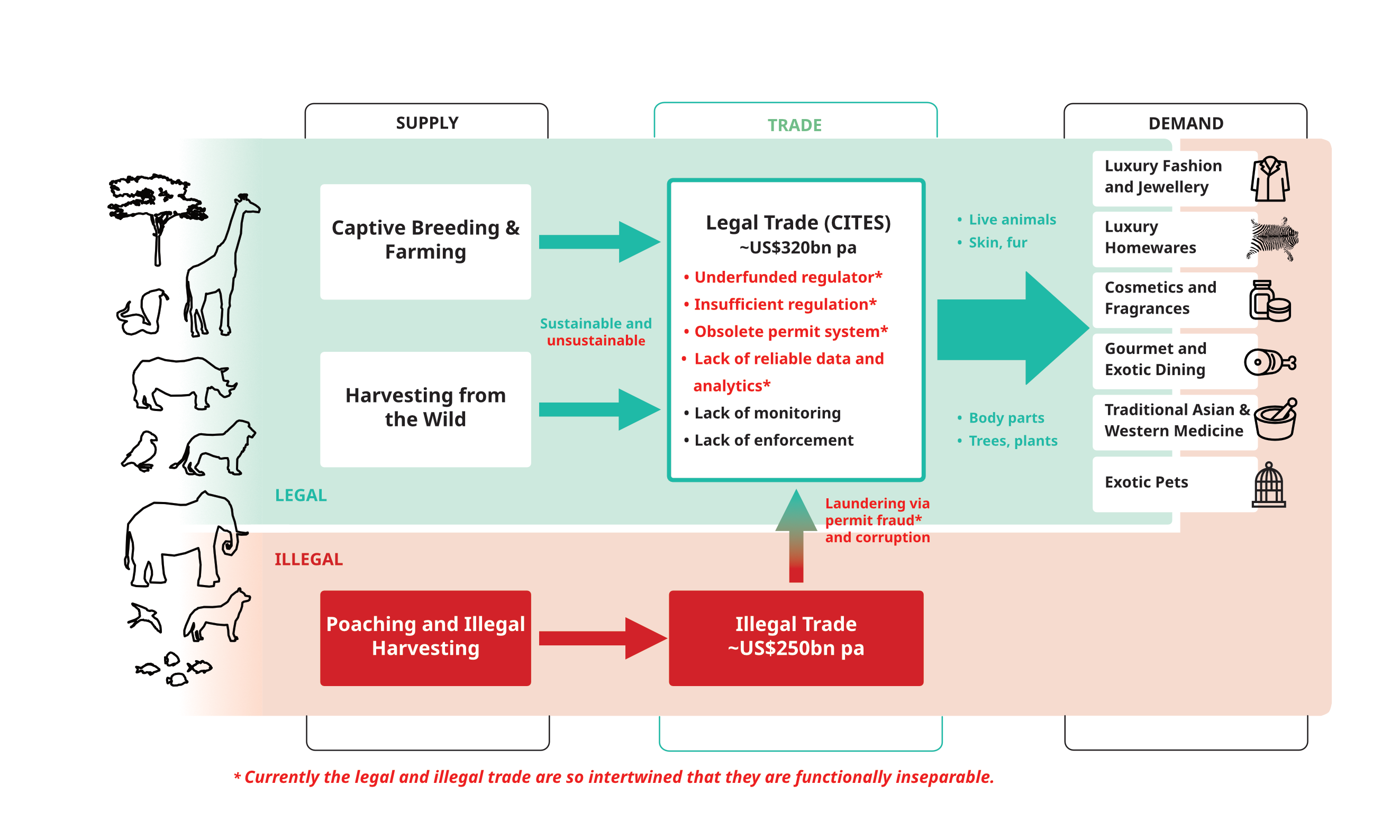
Any international trade based on the extraction of wild species should be regulated through both a reverse listing model and a business pays model for all associated costs. Reverse listing means the default is no trade until those who want to profit from it can prove they can do so in a sustainable, legal and safe way.
This would mean any business or industry wanting to use a specific wild species would have to demonstrate upfront, before international trade is allowed, that they have the required measures, processes and personnel in place to ensure:
- Sustainable offtake levels aren’t breached.
- Illegal ‘raw materials’ can’t be laundered into their supply chain at any point.
- Health risks associated with spillover events during wild harvesting, in captive breeding facilities and at any other vulnerable point on the supply chain are mitigated.
It worth reminding ourselves here that this is basically the polar opposite of what actually happens in the international wildlife trade today. Sustainable offtake is a nonsensical concept in a CITES environment where baseline population data for most species simply do not exist. Harvesting data equally don’t exist, as CITES only cares about export/import data. Supply chains are not monitored and laundering illegally harvested specimens into legal trade is rampant and easy. CITES has no mandate to look at health risks associated with the trade.
This is why over the years we have lobbied for the international trade in ALL wild species to move to a reverse listing model under the CITES. Most people who we have spoken to in the conservation world have said that this couldn’t happen. They argue that this would mean the number of species regulated by the CITES, namely ALL wild species extracted for the international trade, would be too many for the regulator to cope with.
They say this because they don’t understand profit margins.
Under the current model, the default is:
- To trade until it is proven to be detrimental to the species
- All profits are internalised to the business, and its investors, while the environmental costs of extraction are externalised
- Costs of regulation to ensure legality are externalised
- Cost of prosecution where illegality is uncovered are externalised
The fact that all these costs are external to the business helps maintain profit margins, in turn maintaining business and investor interests in ‘resource’ extraction.
A small number of people profit while wild species pay the ultimate price as they are driven ever closer to the edge of extinction.
For those who don’t care about non-human species it is worth remembering that the planetary boundaries model has clearly demonstrated that the loss of ‘biointegrity’, where ecosystems have been degraded, has reached a level of loss which poses a very high risk to every species on the planet, including people.
Many in the conservation world, believe that moving to a reverse listing model, where business has to spend the money upfront – to prove trade can be sustainable, legal and safe – will cause an explosion in the numbers of species listed by the CITES. What they haven’t realised is that it will in fact mean that many species would never be traded in the first place. The cost of doing all the pre-trade work and ongoing compliance would be too prohibitive, so businesses would have no commercial interest in developing the international commercial trade.
As Nature Needs More’s 2021 report Modernising CITES demonstrated, a reverse (white/positive) listing model makes business responsible for internalising compliance, while it simultaneously keeps companies at arm’s length from the regulator and the regulatory process. This is not a new or difficult model, in fact, it is the model used in other industries from the pharmaceutical to airline industry.
Why don’t conservation NGOs and academics demonstrate the most basic commercial ability to understand regulatory models and viability of trade? This lack of commercial acumen is inappropriate given they are a key stakeholder in a trade which has been called one of the most lucrative in the world. As the conservation world continues to avoid staring into the dark corners of commercialisation this is having tragic consequences for the wild species they supposedly care about.
Instead of the species specific, country specific approach most conservation scientists follow, if they are working on a species that is or could be traded, they need to steep themselves into a world of sales and pricing strategies, marketing, cost of goods sold (COGS), raw materials and inventory costs, logistics, procurement, insurance, compliance costs, operational efficiency and so on.
For example, moving to a reverse listing model would increase the Cost of Goods Sold (COGS), it would increase compliance costs and procurement related costs. In many instances this would make the upfront investment to prove that the international trade can be sustainable, legal and safe, prohibitive. As a result, only the species perceived to be the most commercial valuable are likely to receive this type of upfront investment. This alone would significantly reduce the number of species that enter the international trade.
Under a reverse listing model businesses would also need to heavily invest in infrastructure and personnel at the raw materials end of the supply chain to manage the needed transparency and governance. Supervision of harvesting and aggregation is expensive as it is far from easy for many species – think corals and other reef species that have to be collected by hand, or orchids, cactei and so on. What happens currently is that while some inroads have made into the transparency of intermediate and final stages of manufacturing, much less real governance is being done at the raw materials end (because it is not required by the regulator).
Businesses worldwide have openly acknowledged the scale of green crime in their supply chains; this can only happen because they have been allowed to outsource a big chunk of their COGS. They can currently take an all profit, no responsibility approach to extraction at the raw materials end of the supply chain.
So, the upfront costs associated with moving the international trade to a reverse listing model would likely mean that many businesses would be unwilling to make this investment, especially if quotas are strictly enforced and limit trade viability. Thousands and probably 10s of thousands of species would no longer be legally traded internationally.
Just because international trade in these species would no longer be legal, that doesn’t stop community and cultural trade remaining. Let’s recall the IPBES not only established that trade is the biggest extinction risk for marine species and the second biggest risk for terrestrial and freshwater species, it also established that international trade is the major culprit for unsustainable extraction, not community use or local trade.
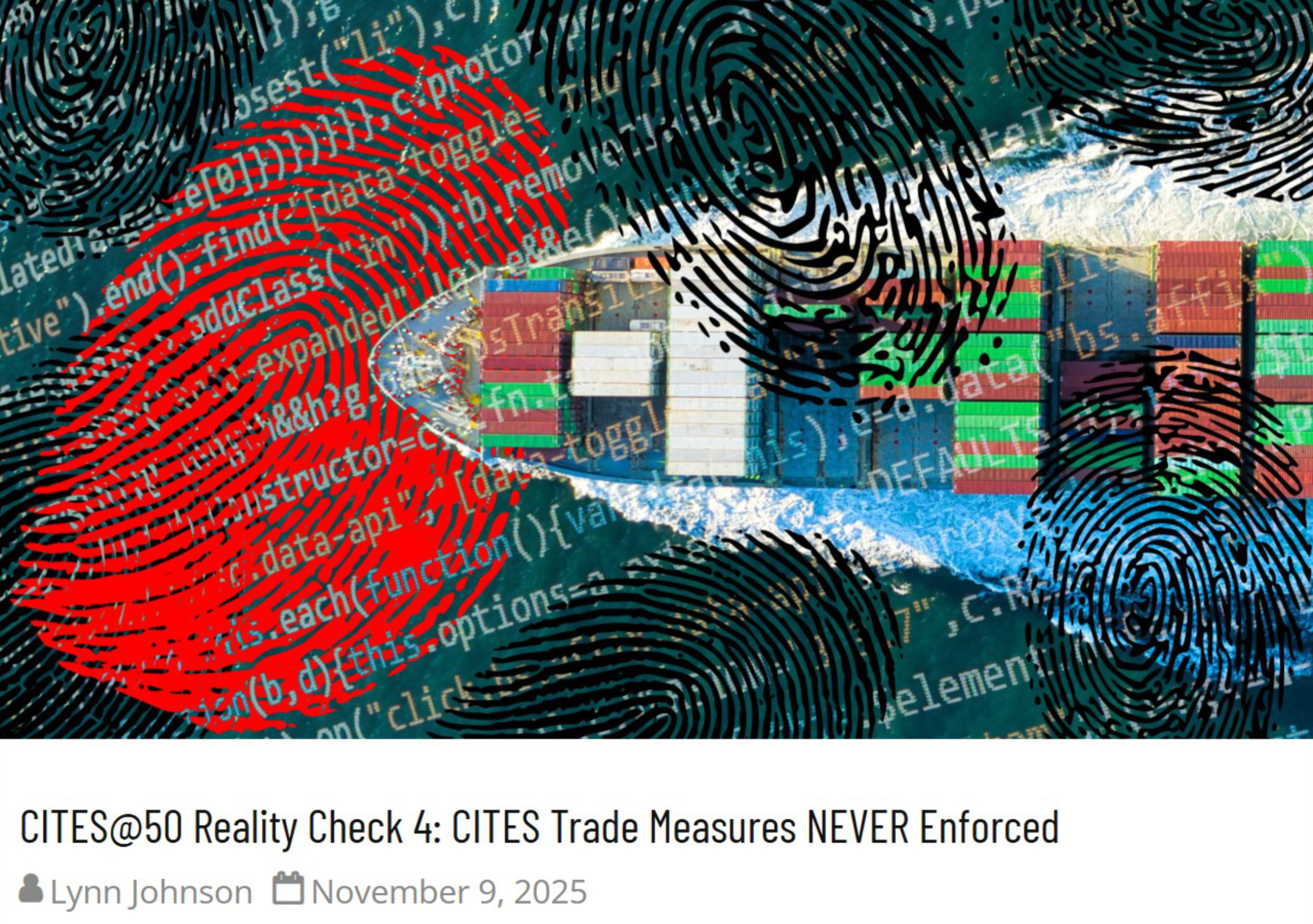
Even if some species make it through the first two stages, namely 1) the upfront investment to demonstrate that extraction can be done in a sustainable, legal and safe manner and 2) all the infrastructure and personal are hired to manage this transparently, this would still mean that if the international trade gets the go ahead businesses would have to pay the full cost of regulation on an ongoing basis. Again, this is commonplace in many industries and nothing new. It is only news to conservation scientists who lack commercial acumen and broad-based trade/regulatory experience.
In some instances, the increased costs could be easily absorbed given the profit margins that can be achieved for extreme luxury goods such as crocodile/snake skin handbags marketed by the like of LVMH and Kering. But those are most likely the exceptions, in most cases the trade in wild species is only profitable because businesses can externalise all of the costs.
If conservation scientist want to remain relevant, they can’t turn their backs on understanding the system on international commercialisation trade. Their discomfort with these critical aspects of global trade makes them look like flat earthers or the theologians who stuck to Ptolemaic orthodoxy – that the earth stands still. Endangered species desperately need conservation scientist and academics to ‘look up’ and have the courage of Copernicus and Galileo.
At present, this courage is lacking. With very few exceptions, most academics and conservationists clinically sidestep the overexploitation as part of the legal trade, though they admit it is ten times greater than the illicit trade. In addition, they stick to the comfort of rewilding projects or expanding ‘protected’ areas, neither of which stop extraction or make up for the overextraction elsewhere.
Conservation scientists, those in NGOs and academic, will stay irrelevant as long as they remain commercially naïve. They can’t save the natural world from corporate predators who have influenced governments legislation, including limited liability, and regulation, thus “ruthlessly taking advantage of imperfections, weaknesses, and vulnerabilities within the market”.
If conservation isn’t willing to address the failure of the current regulatory model and the fact that businesses are able to externalise all costs, then business will just keep running rings around them.
Currently the only strategies that the conservation sector seems to be running in relation to trade related biodiversity loss are enabling the status quo or hoping things will improve through private and voluntary initiatives.
This hasn’t worked for 30 years, so their lack of effectiveness and their commercial naivety will become more apparent in the lead up to 2030.
This will not only accelerate the transfer of public support from the old conservation institutions to the more effective activist organisations that have stepped into the void, but it could also result in a significant backlash to the big conservation brands.
This public backlash may come because of the realisation that the conservation sector has wasted decades helping businesses launder their reputations. All because the conservation sector didn’t have the courage to undertake the professional development they needed to trade in their highchair by becoming more capable of calling out and corralling commercial ruthlessness.