

Periodically new research or a news article exposes (again) why Nature Needs More was established in 2017: to lobby for system change to protect the tens of thousands of species caught up in international trade.
In the last week, this the publication, Closing the border on Australia’s domestic elephant ivory trade, reconfirmed what the Australian Federal government refuses to heart, that Australia is an international outlier, and remains one of the few wealthy CITES countries without a comprehensive domestic ivory-market closure, despite efforts since 2016 to close such markets.
And it isn’t only elephant ivory, as long ago as 2012, European Union authorities highlighted the “road to Australia” as a vital corridor for the illegal rhino horn trade, revealing a dramatic spike in applications to re-export mounted rhino horns from Europe to destinations including Australia, China, and Hong Kong.
Transitioning From Breaking The Brand To Nature Needs More
By 2017, I had reached a simple conclusion: the illegal trade in endangered and exotic species cannot be decisively tackled while the legal trade system remains full of loopholes.
This conclusion was the result of two projects.
First: Rhino Horn
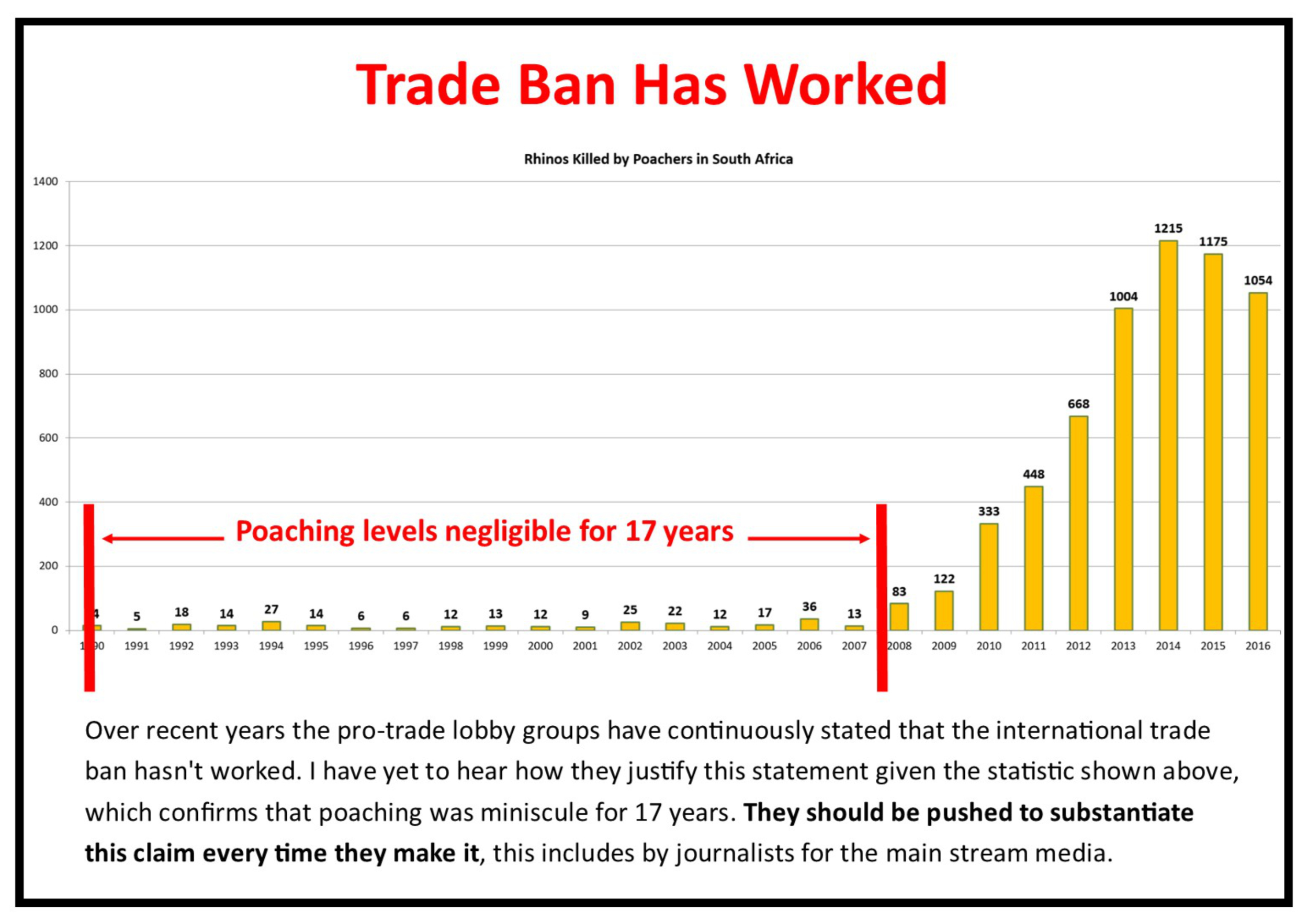
For many years, after the end of the 1980s rhino wars, there was very little poaching of rhinos. But for some reason, those who wanted to sell horn, governments and private owns, chose to ignore this and the push to open a legal international trade in rhino horn began building substantial momentum around 2005, primarily driven by South Africa.
Since then, proponents of legalising international trade in rhino horn argued that horn from a farmed rhino could satisfy demand and reduce poaching. Despite repeated claims, no credible consumer analysis demonstrated that users in Southeast Asia would switch from wild to farmed horn. Nor was a genuine business model ever produced showing how an international trade in horn from farmed rhinos would stop (or significantly reduce) the poaching of wild rhinos. This debate has been allowed to go around in circles for 20 years, all at the expense of the rhino.
Second: Elephant Ivory and Rhino Horn in the Australian Antique Trade
As part of a team lobbying for a domestic ban in elephant ivory and rhino horn in Australia, as the number nerd I researched the CITES trade data between the UK and Australia. The results were (and still are) startling. Analysis of trade in Elephantidae specimens between Australia and UK from 2010 to 2016 using the CITES Trade Database:
- The number of Elephantidae specimens exported from the UK to Australia amounted to 2,953 ‘units’
- In the same timeframe the number of Elephantidae specimens recorded as imported into Australia from the UK equalled 3 ‘units’
- Total discrepancies: 2,950 ‘units’!!!
If the CITES system could not provide transparency between two wealthy countries for two of the world’s most iconic species, what chance did it have of regulating trade in the tens of thousands of less visible (neither iconic nor sexy), commercially valuable species listed under CITES?

So shocking was the legal trade data, that I was hooked and I wanted to understand the legal trade system. No matter what I looked at the legal trade discrepancies were unfathomable.
That was the point at which the problem became clear. The conservation challenge was not simply poaching. It was that the legal trade system was so obsolete and impoverished that the legal and illegal trade had become functionally inseparable.
Perhaps the most shocking was that all the problems with the legal trade system and data weren’t hard to find; this is still the case.
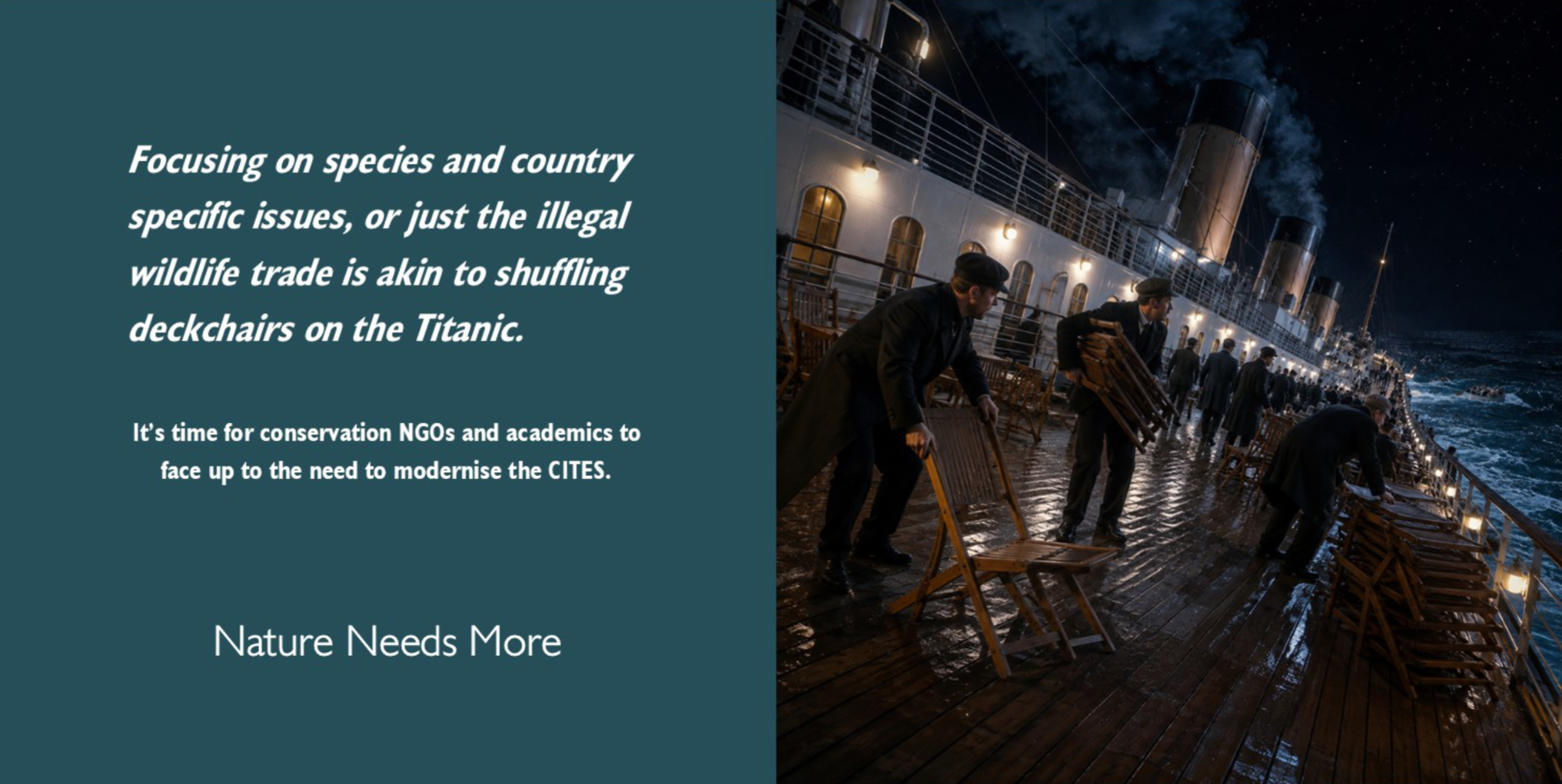
All the time and effort that go into research, papers and submissions, yet significant problems with the legal trade, that leave the system wide open to laundering and fraudulent use, are clinically sidestepped. Where this is by design or by accident, when this became very clear, focusing on species and country specific issues, or just the illegal wildlife trade is akin to shuffling deckchairs on the Titanic.
Nature Needs More was therefore established to lobby for four fundamental changes.
- Modernise CITES.
The CITES has failed in its stated objective of protecting endangered species from overexploitation through trade; unsustainable exploitation is happening because of trade. The CITES needs a strategic review and the modernisation required to monitor today’s—and tomorrow’s—trade. A dedicated enforcement authority, for example, should be mandatory rather than optional for signatories. - Reverse the burden of proof.
Trade in wild species should move to a reverse-listing model, first proposed at CITES CoP3 in 1981. Those seeking to trade should have to demonstrate, before trade is permitted, that governance systems are capable of ensuring legality and sustainability throughout the supply chain. - Make trade radically transparent.
In an era of big data, a paper-based permit system is no longer adequate. CITES trade should be digital, traceable, capable of real-time monitoring, and designed to close the loopholes through which illegal specimens can be laundered into legal markets. - Make the trade pay for the system.
A 1% importer levy on the value of trade could fund CITES’ core operations, conservation projects, and enforcement and prosecution capacity in source countries.
Our work on system change continues across both CITES and the Convention on Biological Diversity.
Conservation is Comfortable and Compliant
But after years of pursuing this agenda, another problem has become impossible to ignore. Conservation is comfortable and compliant. The conservation sector largely does not work on system change.
Not because system change is unnecessary, but because the incentives point them to focus elsewhere.
- While funding is available for iconic species conservation projects, it is far harder to fund structural reform.
- Media attention is available for an endangered animal being rescued or a poacher or trafficker being arrested. It is much harder to generate attention for reforming a trade convention. As journalists have told me, “our readers wouldn’t be interested in this”.
- Political support can be found for saving an iconic species. It is much harder to secure political support for changing the machinery that governs international trade. Anything that might impact trade/economic growth is basically unsellable.
The result is a conservation model that repeatedly funds what is visible, familiar, and politically palatable, namely iconic species, anti-poaching operations, habitat projects, and poverty alleviation.
What it struggles to fund and therefore pay attention to is the less glamorous work of changing the system that keeps generating the problem.
The consequences can be seen in the very projects that led to Nature Needs More.
Rhino horn: the debate that never ends
For more than 20 years, the international debate over rhino-horn trade has gone around in circles.
Again and again, Southern African countries have sought to reopen international trade. At CITES CoP20, Namibia made the latest submission.
The remarkable part is not simply that these proposals continue. It is that the system does not require the fundamental proposition behind them – that trade can be done sustainably and legally – to be demonstrated.
The argument rests on the presumption that regulated international trade can constitute “sustainable use” under CITES, though any evidence demonstrating that extraction for international trade, in 40,000+ species is none existent.

A 2024 meta-analysis, The Positive Impact of Conservation Action, reviewed more than 30,000 potentially relevant publications. When the authors examined sustainable-use interventions, the evidence was inconclusive because they could identify only five publications concerning sustainable use of species that matched the criteria.
That is not an isolated finding.
A 2021 study, Impacts of Wildlife Trade on Terrestrial Biodiversity, examined 1,807 peer-reviewed articles and more than 200 TRAFFIC reports. It found a large negative effect of the international wildlife trade on species populations and reported no support for a quantified, existing sustainable trade.
The CITES-commissioned IPBES Assessment Report on the Sustainable Use of Wild Species, drawing on more than 6,000 studies, reached a similarly uncomfortable conclusion: international trade is associated with overexploitation, while the enormous expansion of international trade has contributed to increasing unsustainable use.
Yet the fundamental assumption remains largely untouched. The burden of proof has never been properly placed where it belongs: on those seeking to extract wild species to profit from trade.
Countries can therefore continue to propose opening international markets without first demonstrating that the trade will be sustainable, legal, and enforceable throughout its supply chain.
Whether a proposal is eventually rejected is almost beside the point. The system does not require the proposition to be proven before it is considered.
Elephant ivory and rhino horn: Australia’s domestic trade
The same failure can be seen closer to home. Australia has known for years that its domestic market for elephant ivory and rhino horn remains a problem.
A 2018 parliamentary inquiry found bipartisan political support for banning the domestic trade. In 2019, at CITES CoP18, the Australian delegation announced Australia’s intention to introduce domestic bans on elephant ivory and rhino horn.
Yet years later, the promised bans have still not been enacted. The domestic trade remains. At any point, since 2018, the federal government could have drafted the legislative changes needed to enact this national ban and taken it to a national cabinet meeting. All the evidence is that state and territory government would support the draft. When we representatives of the federal government why they haven’t drafted this, the response was they haven’t had the resources to do so.
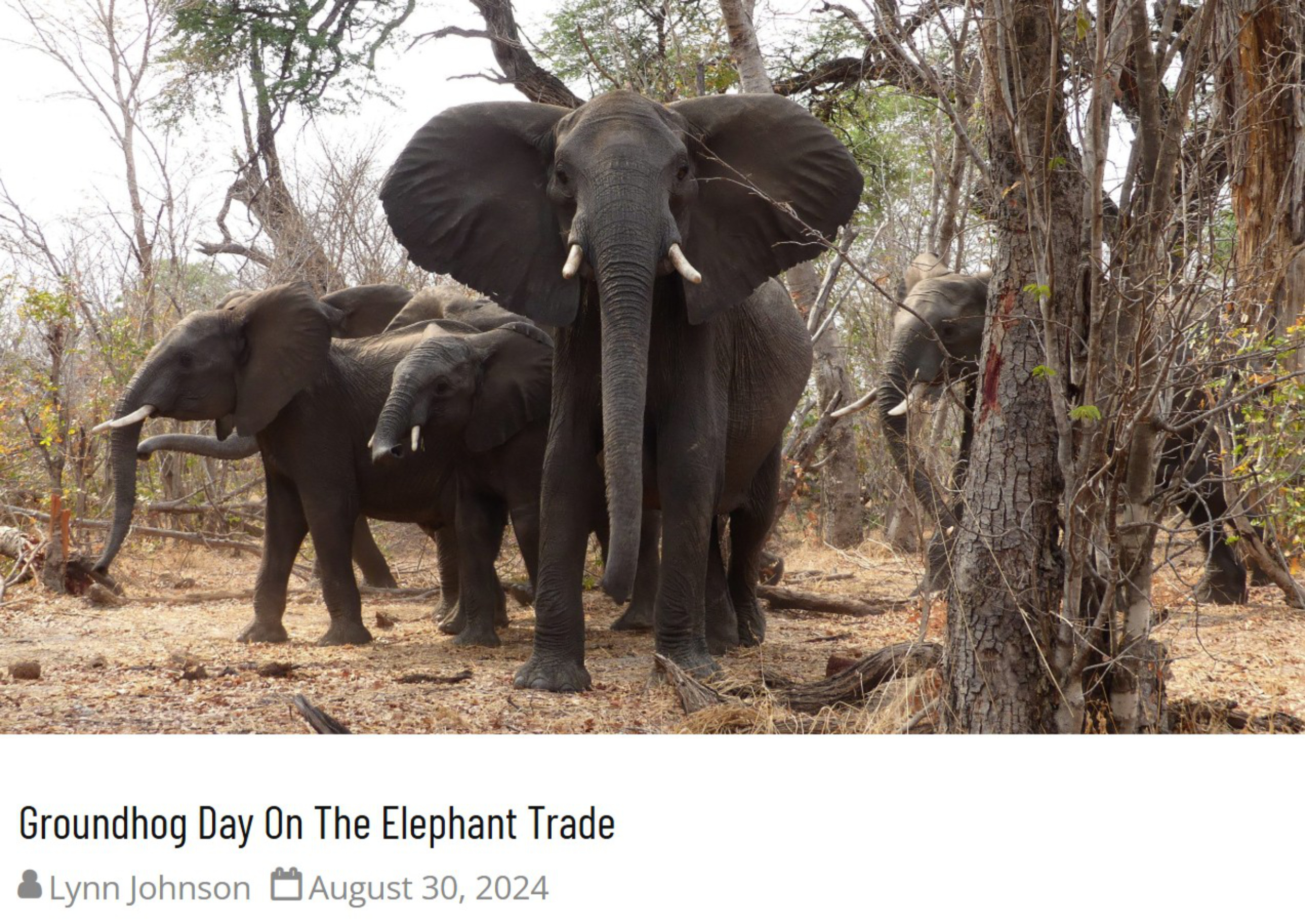
This is precisely the pattern that has become so familiar: the evidence accumulates, the problem is acknowledged, commitments are made and nothing is enacted; the underlying system remains largely unchanged.