

For decades, businesses and industries have profited from nature—extracting its resources, exploiting its genetic diversity, even building entire industries around biological wealth.
If we are serious about making business pay a fair share of the costs of conserving the natural world it depends upon, the Cali Fund is a case study in how not to do it.
The Cali Fund is a global biodiversity fund established under the UN Convention on Biological Diversity (CBD) to receive contributions from companies that use digital sequence information (DSI) derived from genetic resources. It was officially launched on 25 February 2025.
Its purpose is straightforward: to ensure that the benefits generated from commercial use of genetic resources—particularly in industries such as pharmaceuticals, cosmetics and fragrances—are shared more fairly with the countries, Indigenous peoples and local communities from which those resources originate.
The aim of the Cali Fund was to raise US$1 billion annually but it has received just US$6,000 in corporate contributions in its first 18 months!
That is not a slow start. It is a spectacular failure.
It would be laughable if it wasn’t so wretched. And it is exactly what businesses and industries lobbied for, rejecting mandatory contributions and pretending that voluntary contributions would work just as well.
Instead of $1 billion the Cali Fund still has no defined procedures, no people (resources) to administer it, endless arguments over what contributions are buying and what businesses get in return. All enabling a glacial pace and ensuring the status quo – nothing to see here, move right along.
This outcome was obvious and 100% predicable. No volunteer scheme to fund nature has ever worked or will ever work because businesses have no interest in paying for something that they can get for free or at other people’s expense.
The idea that the “slow start” is because “nobody knows about the fund”, as CBD Executive Secretary Astrid Schomaker has reportedly said, is particularly difficult to swallow.
Businesses knew enough to lobby against ‘mandatory’ contributions to kill them off; they can’t now say they are unaware of the ‘voluntary’ contributions since they lobbied very hard for them and got what they wanted!
This isn’t a “novelty”, a “fascinating new mechanism” or a “new idea”. This is one of the stated three main objectives that the CBD was launched for in 1993 – The fair and equitable sharing of the benefits arising out of the utilization of genetic resources.
These ‘strategic plans’ to save biodiversity have been touted by the CBD for years. The first comprehensive strategy created the Aichi Targets, adopted by the parties to the convention in October 2010 at a meeting held at Aïchi, Japan. None of the Aichi Targets were achieved.
Then came the Kunming-Montreal Global Biodiversity Framework, in effect the world’s “Strategic Plan for Biological Diversity 2022-2030”.
After the failure to achieve any of the Aichi targets and negotiations for new targets that were disrupted by COVID-19, countries from Africa proposed something remarkably simple: a 1% biodiversity levy on the retail value of products based on genetic resources and digital sequence information, with the proceeds directed towards biodiversity conservation.
A 1% levy could hardly be called onerous or revolutionary. Yet it encountered significant resistance from wealthy countries and business interests.
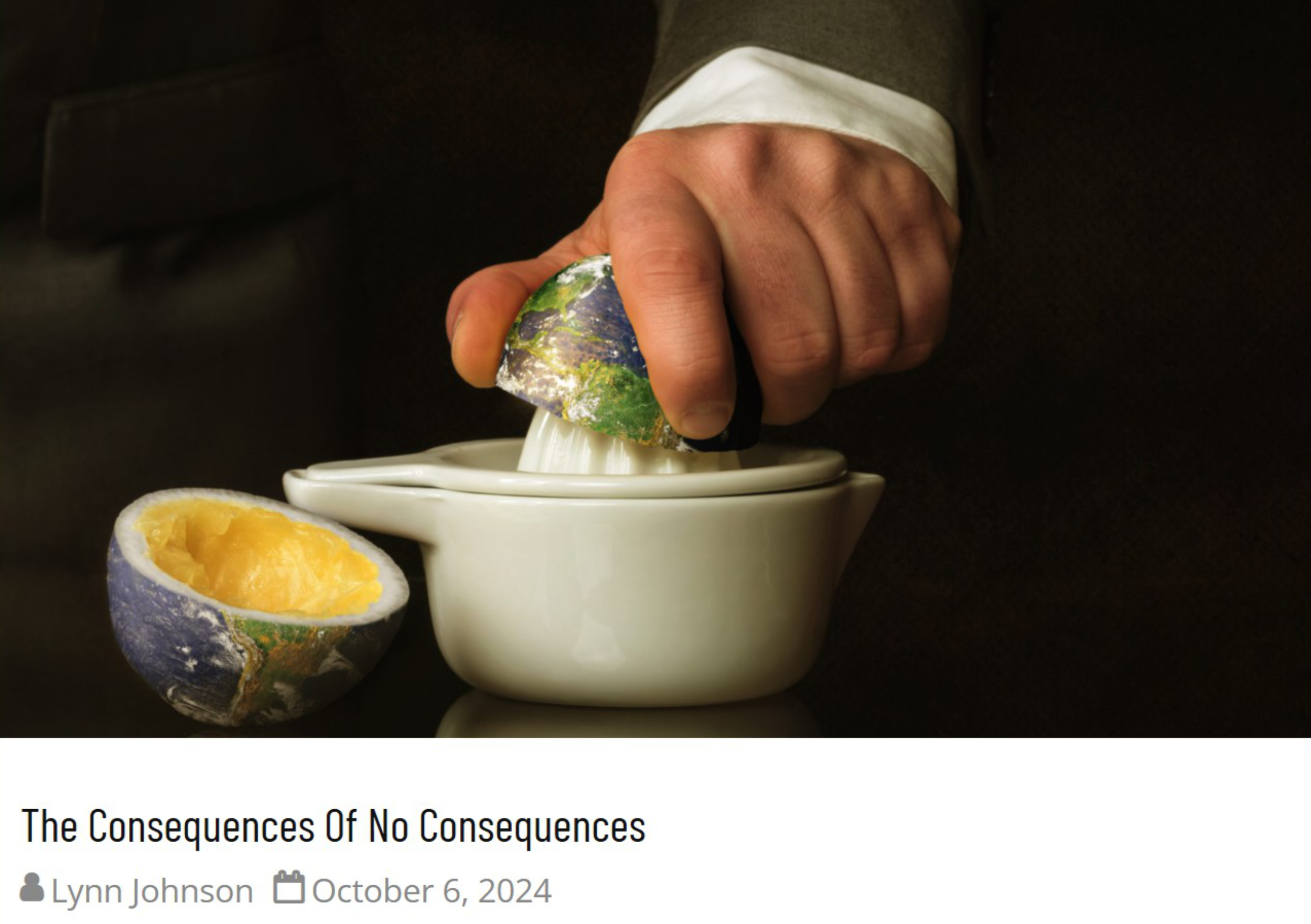
Instead, the world got the Cali Fund and voluntary contributions won. And this is where the numbers become extraordinary.
A CBD-commissioned analysis estimated that annual revenues generated by commercial sectors heavily reliant on digital sequence information could be worth between US$1.5 trillion and US$2.3 trillion.
A mandatory 1% levy would generate between US$15 billion and US$23 billion a year.
Even under the voluntary contribution formula promoted by the Cali Fund—1% of annual profit or 0.1% of annual revenue—the potential contribution would still be measured in billions of dollars.
And what did the voluntary system actually produce? US$6,000 in 18 months.
The gap between the promise and the reality is so enormous it is unfathomable. At the oncoming CBD CoP17 this should force uncomfortable questions interrogating, “Where is the evidence that businesses are willing to make voluntarily contributions?”
Maybe one rule that can be put in place for all future CBD CoP meetings is that business and their lobbyists can’t spend more money attending CoP than they give to the Cali Fund! A DeSmog’s analysis of business attendance at CBD CoP16, in 2024, showed 1,261 delegates representing business.
If you want to average Cali Fund donations of US$6,000, across 1,261 delegates representing business, that’s $4.76 per business delegate. Not enough to buy a cup of coffee in wealthy countries these days, but apparently enough to try to fob off developing countries and steal their genetic resources.
If companies had really wanted the Cali Fund to work, they could at the very least have covered the cost of CBD staff to promote and administer it – the fund was launched without funding for a dedicated staff. As Schomaker has said to those who should contribute, even if you aren’t sure, “make a gesture”. A small gesture could be to cover the cost of personnel to build and promote the voluntary process they lobbied for.
It seems that all companies are doing is complaining about a “lack of information”, a lack of “clarity how these contributions [work to] in terms of implementation of the convention”, making it difficult to “explain to their shareholders”. Again, not a new strategy used by businesses to maintain the status quo.
As with everything else, companies and shareholders seem to think that this is all about them. So, here are some questions companies—and their shareholders—should be answering:
- Why is it acceptable for companies to profit from biological resources without properly accounting for the cost of conserving them?
- Why is an all-profit, no-responsibility model still considered acceptable when the underlying natural capital is being depleted?
- Why are companies allowed to make sustainability claims about biodiversity without demonstrating what those claims actually deliver?
- Why is it acceptable to identify green crime or illegal activity in a supply chain and then fail to report or address it?
- And why should the industries benefiting from nature’s genetic wealth get to decide whether they feel like paying for its protection?
But this isn’t only about the business sector bullshit it is also about the conservation sector bullshit.
The money from the Cali Fund wasn’t only about conservation projects it is also about providing funds to indigenous communities. In fact, at least half of the money raised would go towards the “self-identified priorities” of indigenous peoples and local communities, to provide a “shift toward genuine agency rather than simply providing funding”.
If this was the case, why haven’t all the IGOs, NGOs and conservation academics who constantly bang on about sustainable use and community livelihoods not been promoting the Cali Fund to the businesses they collaborate with? Maybe because they are worried that they won’t be a part of the “self-identified priorities” of these communities?
Why aren’t the world’s largest conservation organisations who regularly sit alongside business, at sustainability forums, asking their corporate partners:
Where is your money for the Cali Fund?
If sustainable use conservationists and sustainability focussed organisations and consultants, who advice big business, believe in their own strategies, how come “Nobody knows about the fund?”. Come on World Economic Forum, UNEP, IUCN – SULi, World Resources Institute, GEF, WTO – Committee on Trade and Environment (CTE), World Business Council for Sustainable Development (WBCSD), Business for Nature, United for Wildlife, Club of Rome, ICCF (and yes I know that the USA hasn’t signed up to the CBD), WWF, WCS etc etc.
There is no place here for language such as a “slow start”. This is not a “disappointing start.” And it is certainly not a “novel mechanism” that simply needs more time.
Call it what it is, a system designed to raise US$1 billion a year has raised US$6,000 in 18 months – it’s corporate free-riding.
It is what happens when those who profit from nature are allowed to decide for themselves whether they will pay for its survival. This is corporate and shareholder greed, it is biopiracy. This is business ‘predation’ – “ruthlessly taking advantage of imperfections, weaknesses, and vulnerabilities within the market”.
At CBD CoP 17, which takes place in Yerevan, Armenia, from October 19 to 30, it is time to say, enough with voluntary promises. That experiment has been run and the result is in; voluntary contributions have failed. So stop wasting time trying to persuade the world’s most profitable industries to voluntarily surrender a tiny fraction of the value they extract from nature.
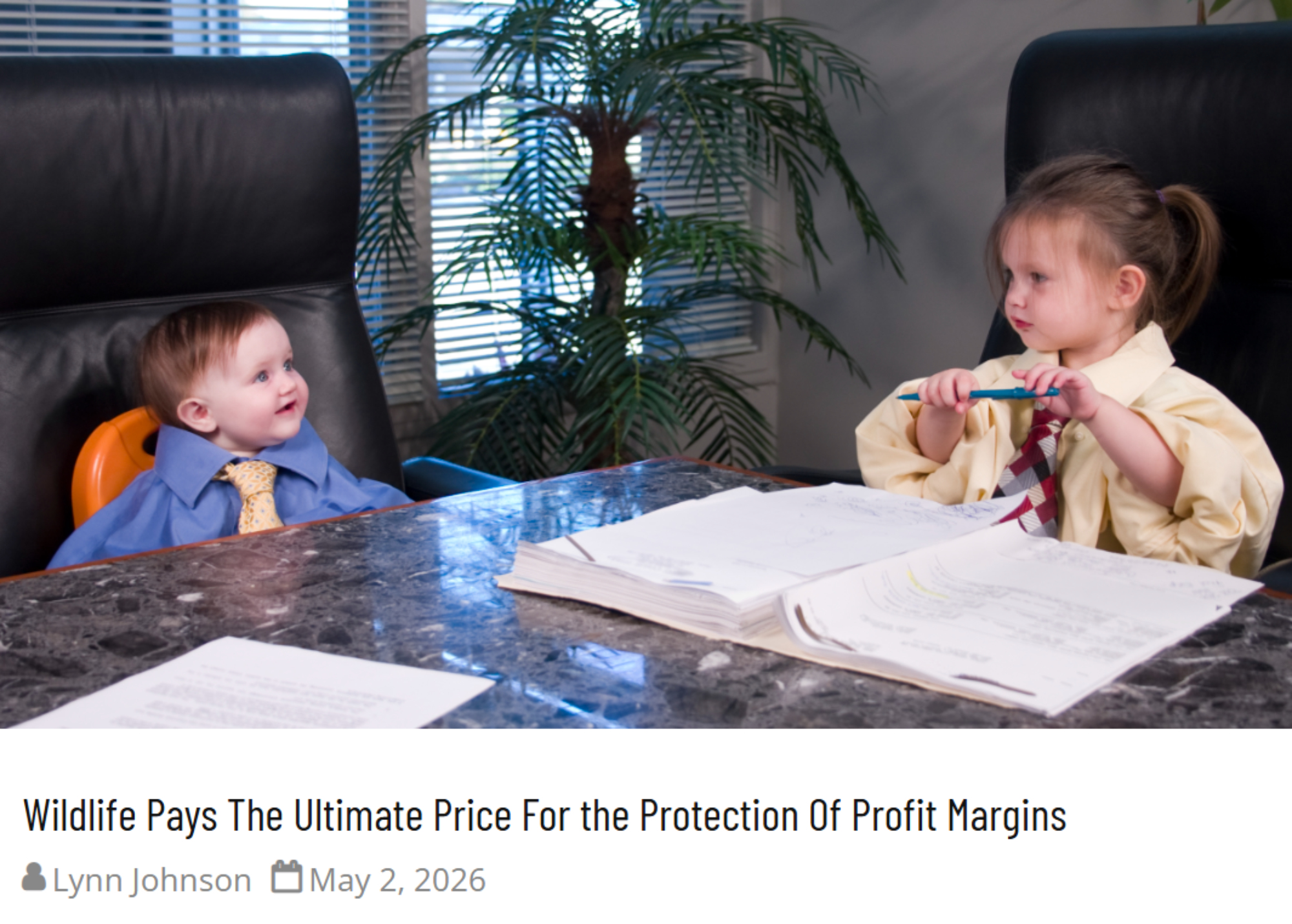
Put the mandatory 1% levy back on the table. If the industries benefiting from the world’s genetic wealth cannot—or will not—voluntarily return even a microscopic fraction of that value, then the choice is obvious, mandate them to pay.
Because biodiversity cannot survive on corporate goodwill (nor should it have to). And the natural world cannot afford another billion-dollar promise that produces $6,000.