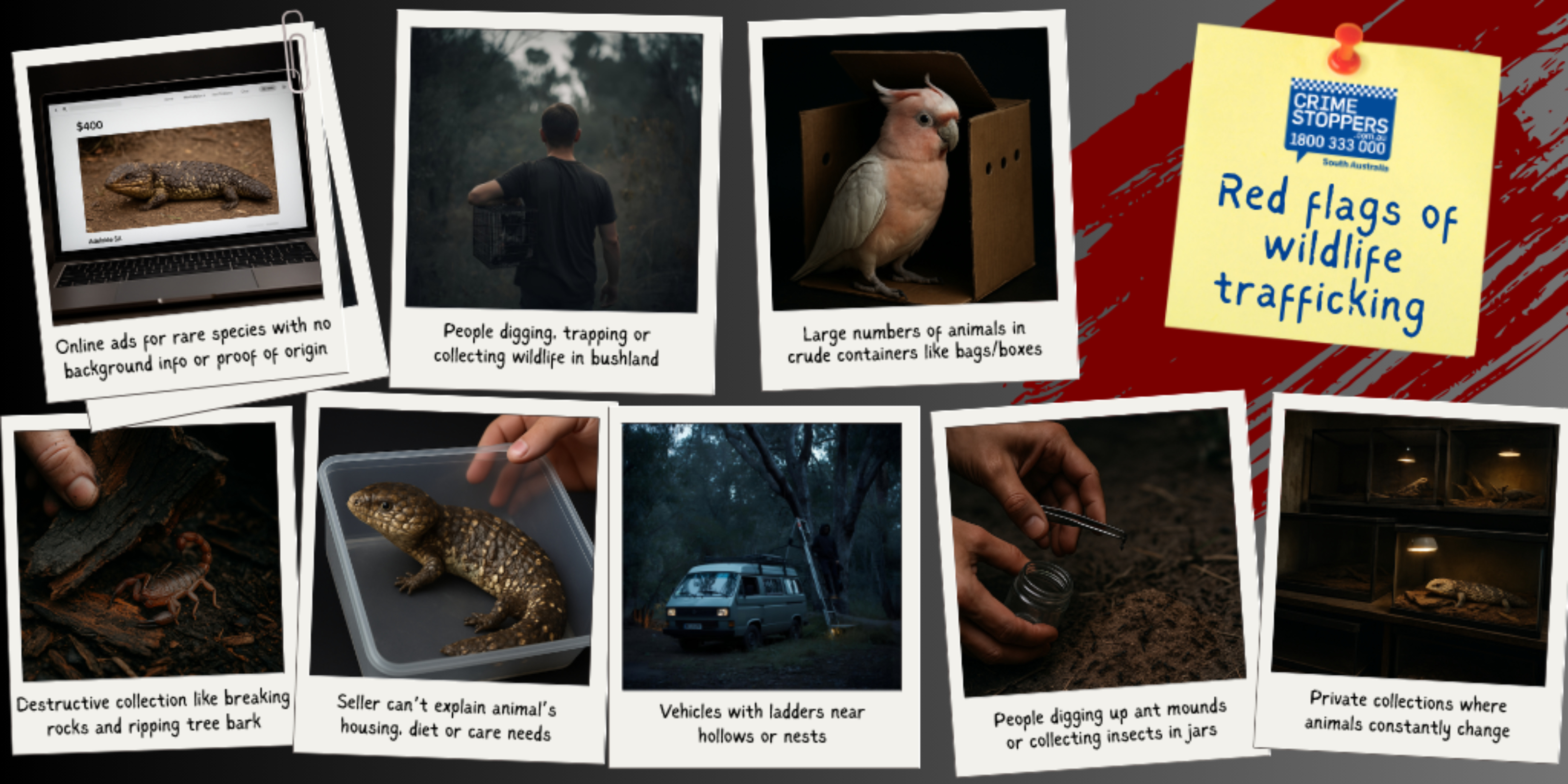
Undoubtedly, the illegal trade in wild species in Australia and across the globe has received more media exposure in recent years. Illegal activity in Australia is most commonly associated with the exotic pet trade. Our country’s unique species means birds, reptiles, mammals and even insects are in high demand worldwide.
Maybe because the illegal trade out of Australia consists mostly of live animals, concealed in boxes, bottles or wrapped in clothing, the mainstream media (MSM) has decided they constitute a good public interest story. Images accompanying articles show the wildlife victims of the trade, their little bodies constrained and contorted, it isn’t hard for the MSM to identify villains and victims that people can relate to.
My work on the exotic pet trade means I now have a better nose to sniff out the stories of seizures and smugglers than I used to, including the ones that never make it to the main media channels. Perhaps the frequency of law breaking has also increased, or customs have improved the effectiveness of detection? It’s probably true that all these things are contributing.
Whatever the case, one thing is VERY clear, given Australia’s unique species are highly desirable in this global market, as a country we have a BIG problem. It is a problem that, as yet, we don’t appear willing or able to address.
The desire for exotic pets has boomed since the 1980s. I thought one novel way to show this was the example used in Nature Needs More’s report on the Exotic Pet Trade that used Google’s Ngram Viewer to analyse the frequency of the word, “exotic pet,” in books published between 1800 and 2022.
Books largely tell stories of the world that the author sees around them, making this an interesting way to demonstrate the rise of popularity of exotic pets.
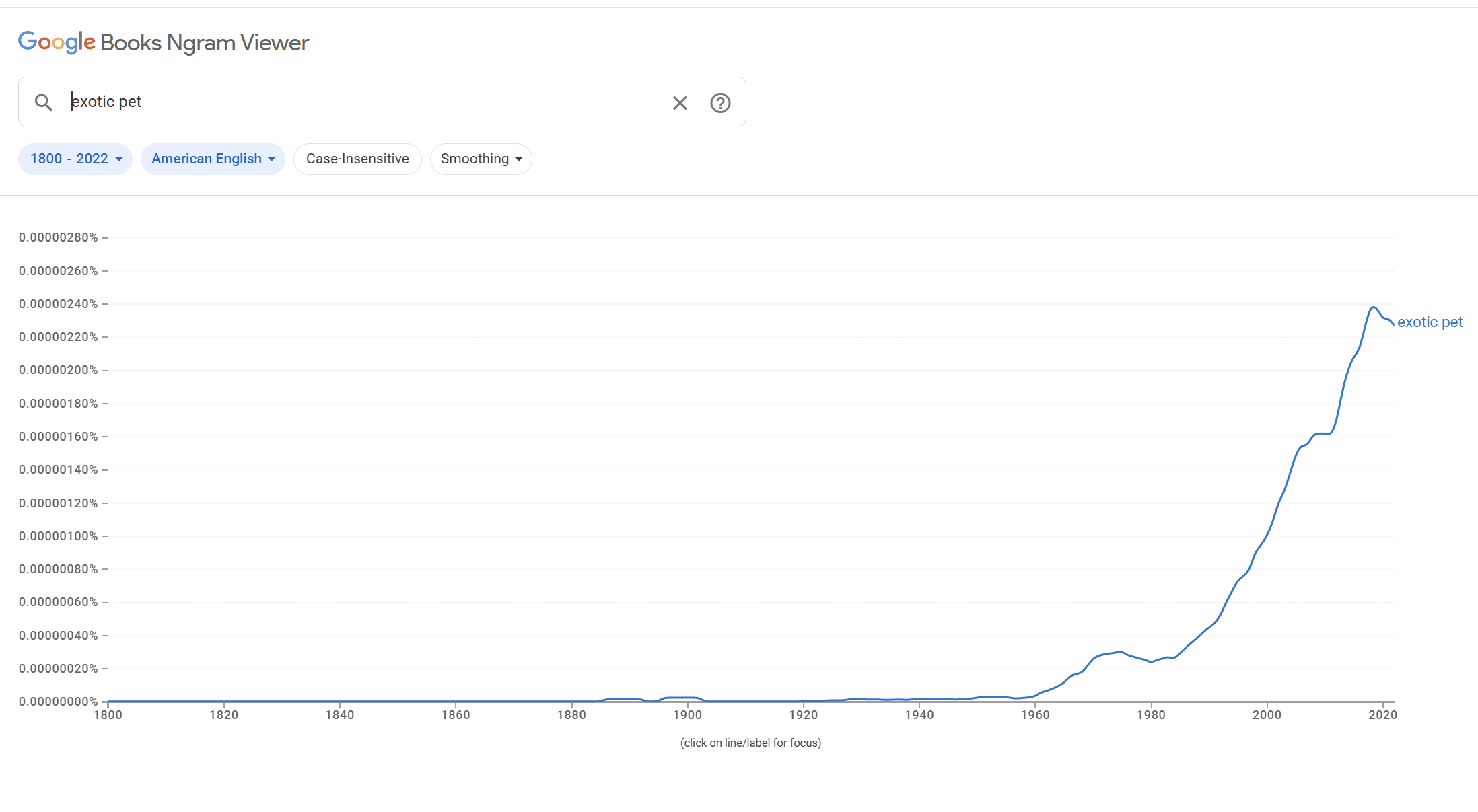
Mentions of ‘exotic pets’ don’t take off until the mid-1980s, not coincidentally the decade that social signalling and status differentiation in the middle class began.
In previous blogs I have covered the scale of trade, Australia’s role in it and importantly the risks associated with it. In this blog I dig into some recent cases of poaching and smuggling in Australia and explore the questions:
- Is wildlife crime treated too leniently by our courts?
- Do those in the judicial system understand the significance of these crimes? Because while there appear to be significant penalties on paper, in the courtroom they are rarely enacted.
- And for Australia’s wildlife traffickers, is there simply too much evidence this form of crime is still low risk, high return?
Before detailing the most recent case I have monitored, I think it is interesting to look at a bit of history.
In 2018, rugby league player Martin Kennedy was charged with wildlife trafficking and facing up to 10 years in jail. Australian border authorities had intercepted a number of packages finding animals both alive and dead, including 18 dead sugar gliders. In the months preceding his arrest Kennedy had “bragged [to undercover agents] of his other lucrative income stream”. He had also made it clear that he thought the risk was minimal, while the rewards were significant. “He said Australian penalties were lax” continuing, “[these animals are] worth $300 (each) here, they’re worth three grand over there (overseas), so how about instead of selling all these here, I sell them over there and buy a fucking house”. In the end Kennedy was then jailed for two and a half years.
Another case is that of convicted smuggler, Niall Cooke, from Western Australia, who in 2015 was fined just over $6000 and given a spent conviction order for shipping reptiles in the mail to Melbourne. In 2023 he was found guilty again on separate charges but on appeal had a fine reduced from $45,000 to $17,000. Cooke, who “has a criminal history of animal smuggling, including more than 40 convictions”, had told ABC 7.30 Report [in 2018], “he had turned his life around and wanted to expose the lucrative black market for Australian wildlife.” Less than one year later, however, he was found with turtles, snakes and skinks in his car. While his lawyers argued his intention was to take photographs (the same excuse he had used on his first time in court), given his history maybe the smartest thing he could have done was simply stay away from wildlife altogether!
I could cite many more historical cases that highlight repeat offending and or judicial leniency for wildlife trafficking in Australia.
The most recent, high-profile case is that of Neil Simpson, and I was extremely pleased that he has received a jail term. The 61-year-old Sydney man was sentenced to 8 years in jail with a non-parole period of 5 years and 4 months based on, “three combined charges of attempting to export Australian Regulated Native Specimens, in 15 separate packages, between 2018 and 2023”. Investigators recovered 101 live animals from the mailed packages. The significant penalty is indeed a clear message on the risks of wildlife trade as stated in the press release.
However, let’s have a look at a few things I’ve found out in looking at the Neil Simpson case.
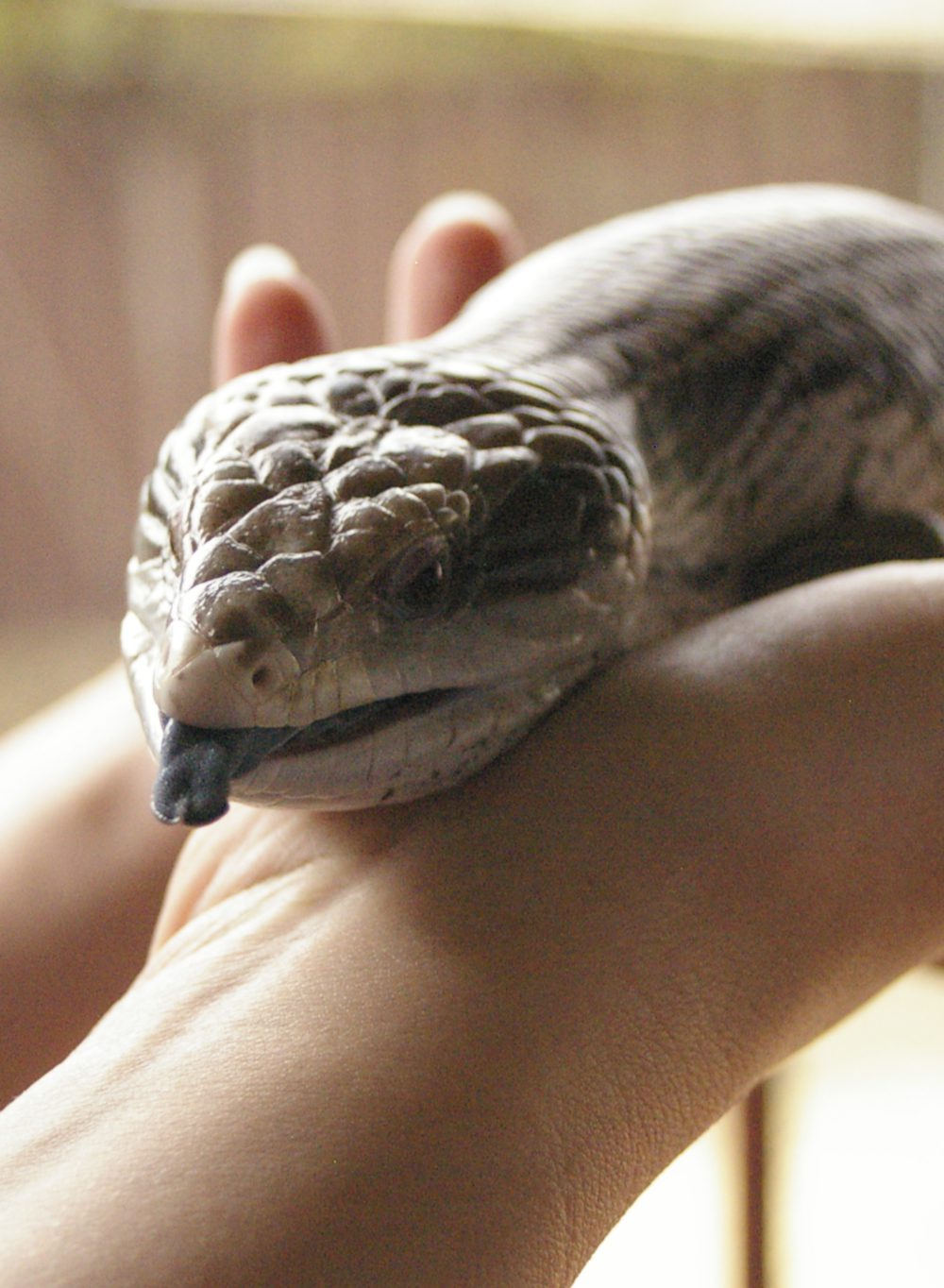
- In 2010 Neil Simpson was, “fined $2000 and ordered to pay $9735 in court costs after being convicted of illegally possessing 29 native reptiles……….intercepted the illegal consignment of reptiles which had been flown to Perth from Newman and were scheduled to be put on a flight to Sydney. The consignment included a death adder, geckos of various species, dragon lizards, a blue-tongue lizard and pythons. The reptiles were concealed in plastic containers.”
- In 2013 he was twice convicted in NSW. In one instance he was fined in relation to, “illegally trading in exotic snakes and reptiles for years without a licence, was fined more than $20,000 for illegal importation and ordered to pay $18,000 in court costs.” In this instance investigators also found 526 fake identity cards and equipment to manufacture these, as well as more than a 100 reptiles registered in his wife’s name of which she had no knowledge. Earlier in the year he had been given a 12-month Good Behaviour Bond relating to the charges of identity fraud.
- In 2018 he was found guilty of, “a range of offences related to importing and exporting reptiles. He received a total effective sentence of 1 year 10 months and 27 days imprisonment to be released immediately on the condition that he be of good behaviour for the period of the sentence.” In one seizure, “12 pygmy spiny-tailed skinks were returned to Australia from South Korea uncollected…….. it contained seven live skinks and five dead ones. A vet euthanised the live lizards due to biosecurity concerns.” The welfare implications for these animals are significant enough let alone the biosecurity concerns
- Then, in 2026, as noted, he has now received his jail sentence of 8 years relating, “to three combined charges of attempting to export Australian Regulated Native Specimens, in 15 separate packages, between 2018 and 2023.”
As this highlights, it has taken our systems of justice nearly two decades and four trips through court to realise that this man was going to keep offending and that he clearly saw the potential financial return worth the risk of penalty that he faced.
During this long period of offending, custodial sentences were available. Clearly, what may be considered significant fines were obviously no deterrent to Simpsons illegal wildlife trade activities.
Noting that the number of reptiles involved in the cases where Simpson was caught is in the 100s, it would seem reasonable to suggest his pattern of behaviour means it is likely that there have been many other hundreds, possibly thousands, traded, exported or imported, without detection resulting in handsome profits in the process.
An Austrac report in 2020 detailed that the prices paid overseas for many of our reptiles are up to 28 times what is paid for the same animal in Australia, and the case of the skinks sent to Korea, detected on import by sniffer dogs and then returned to Australia, confirms that not everything is discovered at export. It’s not too much of a stretch to think he’s likely made a significant profit over the 20+ years.
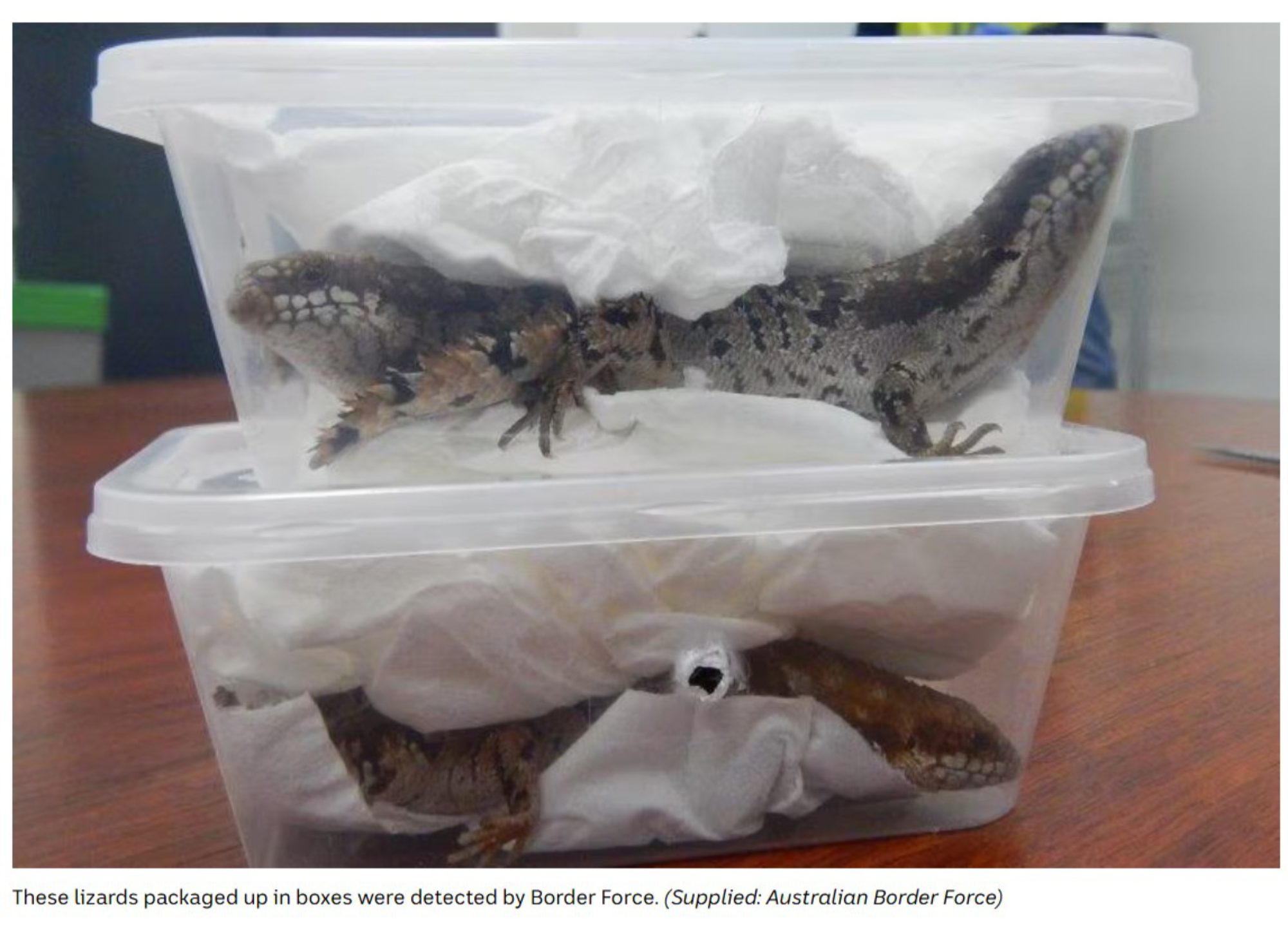
The other reality is that while there have been hundreds of individual reptiles involved in the seizures only a small number of charges have been prosecuted. Also of note is that none of the charges related to animal cruelty which would have seemed appropriate considering their shipping methods where Neil Simpson, “used Australia Post to send and receive the animals, and would wrap them inside calico bags and then a towel, or inside coffee mugs or plastic bags”. Treating a living animal in such a cruel and heartless way must be a part of any judicial deliberation.
So, the questions I believe need to be answered include:
- Why do prosecutors lay so few charges despite the number of individual animals involved?
- Why do police and prosecutors not include consideration of animal welfare in our judicial processes and include standalone animal cruelty charges in these cases?
- Why does the judiciary need to see so many repeat offences before a jail term is handed down?
- Are our penalties a sufficient deterrent when we consider the growing market for exotic pets and the value that is placed on rare or unique species?
In summary, what steps could we take so our judicial system is more of a deterrent factor when it comes to wildlife crime? Below I consider just a few.
Number of Charges
Looking at just a handful of these cases, I am intrigued by the handling of the charges. In relation to the 2018 case, Neil Simpson faced 4 charges under the Federal EPBC Act despite the fact the case involved the attempted and in part successful export of 16 individual reptiles and import of 30 individual reptiles. Under the legislation, each individual offense could have carried a single charge.
In the most recent case, he was charged with 24 offences in a case that involved the seizure of “101 Australian reptiles from seized parcels destined for Hong Kong, South Korea, Sri Lanka and Romania”.
The EPBC Act allows each individual case to be pursued, so I ask why are so few charges laid?
A slightly extreme comparison but I can’t imagine that a person committing a multiple homicide wouldn’t be charged for each murder. My point is, where the law allows for individual charges, would it not be better to place ALL possible charges and argue 1 penalty in totality rather than pursue one charge with one penalty.
This would mean that while the penalty may be no different, the offender would have a record showing the higher number of charges which would be a more accurate reflection of the scale of their offending behaviour.
Carrying such a history may also be a greater deterrent for future offending.

Animal Cruelty Implications
In all the cases of illegal wildlife smuggling I have read about in Australia at no time have I seen reference to a charge relating to animal cruelty.
Under the EPBC Act it is an offence if, “the person exports or imports a live animal in a manner that subjects the animal to cruel treatment.” These offences carry a maximum 2-year jail sentence.
In the case of Simpson it was noted that animals were shipped, “in calico bags. These bags were concealed in bags of popcorn, biscuit tins and a women’s handbag and placed inside cardboard boxes.”. Convicted Western Australian wildlife smuggler Niall Cooke stated, “The way the animals are smuggled out of the country is disgusting, and it’s not safe for the animals“.
I would contend that we need to take far more seriously the animal cruelty considerations in these crimes. Ignoring this aspect of the crime also disregards both the high mortality rates and the fact that all too often, even if animals are returned to Australia, they are euthanised, not rehabilitated and released.
Surly this is enough to pursue animal cruelty as a part of any case? And, even if the packaging had been considered ‘appropriate’, to have no tracked shipping service to ensure their collection at the other end in its own right is neglecting his duty of care with regard the individual animals.
The Australian Veterinary Association developed a position paper on the Exotic Pet and Wildlife Trade. In this document it states, “Welfare risk exists at all stages of wildlife trade from capture to final destination. Poor welfare may result from injury or stress during capture and transport, inappropriate housing, husbandry, environmental conditions, poor hygiene, disease, or lack of or inadequate provision of food and water. The AVA holds grave concerns for the welfare impact on illegally trafficked animals and argues that greater effort should be made to address the illegal trade in relation to detection, enforcement, and penalties, including the application of relevant state and territory Animal Welfare legislation.”
I believe it is time to ensure that overt animal cruelty, such as knowingly shipping reptiles through the mail, often in appalling conditions, is prosecuted as a standalone charge when considering penalties for this type of crime.
In the cases mentioned of Kennedy, Cooke and Simpson – no charges were laid relating to animal cruelty. While sentencing often takes into consideration the issue of cruelty I do not feel this goes far enough.
The Kennedy case in part involved the illegal import of 15 chameleons and 18 sugar gliders to Thailand. All of these animals died during shipping and yet the initial judgement noted, “I am not satisfied that there was undue cruelty on the part of the offender.”. Thankfully, this manifestly inadequate judgment was subject to an appeal in the Crown Court.
It is critical that all levels of the Australian judiciary have front of mind the AVA’s position highlighted above – welfare risks exist at all stages of wildlife trade – from the moment that they are illegally caught in the wild to their fate on foreign shores, they experience unnecessary stress.
Repeat Offences
A consistent theme of wildlife trafficking in Australia is the high prevalence of repeat offending before there are any significant consequences. I have been chasing the court transcript from the Simpson case as I am particularly interested in the judges’ comments in regards this. If anyone can direct me to it, I would be grateful.
As I see it, the punishment handed out, relative to what is available, may be softened at one of three levels.
- Investigation and instruction of the Prosecution
- Prosecution of the case
- Judgement
As such, it is critical that the police, lawyers and judges all understand the implications of for Australia’s wild species and ecosystems, of the growing demand for our countries rare and unique wildlife to the exotic pet trade. There are many significant risks associated with this trade – both the legal and illegal trade.
At present, the decision to lump multiple chargeable offences into a single charge seems to be the default approach. Is this ‘recommendation’ driven by those investigating or prosecuting in the hope of being more successful in getting a conviction? If so, why, given the law explicitly allows each individual case to be prosecuted?
At some point non-custodial terms are decided upon in place of jail time. Is there awareness and scrutiny made of prior convictions in other jurisdictions when considering the issue of repeat offences and likelihood of reoffending?
In 2018, it was deemed acceptable to decide a suspended sentence was appropriate for a repeat offender such as Simpson. Yet his penalty in February this year covered offences from 2018 to 2023 suggesting he hadn’t been that deterred by the 2018 finding against him.
His pattern of behaviour seemed pretty apparent at the time of his 2018 conviction if all previous offences in WA and NSW had been considered – were they? Was the research done to present this pattern to court? Was it highlighted enough at prosecution level and was it considered at judicial level in the sentencing?
The years of minimal consequences appear to entrench the wildlife trafficking behaviour of the likes of Simpson, Cooke and others. It seems to me that this low risk, high reward thinking can only be broken if the significant fines and custodial sentences available are used sooner rather than later and consider an offender’s full history.
Low Risk Fining
It could be argued that fine levels and our unwillingness to apply the higher penalties results in criminals accepting that the fine system is virtually a cost of doing business.
Currently the maximum penalties are 10 years in jail or 1000 penalty points for individuals convicted of importing or exporting prohibited species.
1 penalty point at present is worth $330 meaning a maximum fine of $330,000.
Over the 4 convictions for Neil Simpson, outlined earlier, he received a total of $22,000 in fines; likely nothing compared to the profits he made over the years.
Research publishing in 2024, Scale of unregulated international trade in Australian reptiles and amphibians, found 170 native Australian species of reptile and amphibian in the global wildlife trade. Based on what we know about the exotic pet trade, rarity sells! As such it is likely that these rarer species sell for a premium overseas
Australia has more than 850 reptile species of which more than 90% are unique. If we don’t match our scale of our fines with the value of these rare individuals in the global market, then little will change the perception of it being a low risk high reward exercise to illegally export our natural heritage.
Some Solutions
So, what steps might we take to push back against the growing illegal trade in Australian species for the global exotic pet trade?
In the article – Crime against wildlife is surging in Australia. These 4 reforms can help tackle it – the authors suggest four key steps to turn the tide and take this problem seriously. These very much align with the Australian Veterinary Association’s policy – Exotic pet and wildlife trade – which I mentioned earlier and helped develop. They propose:
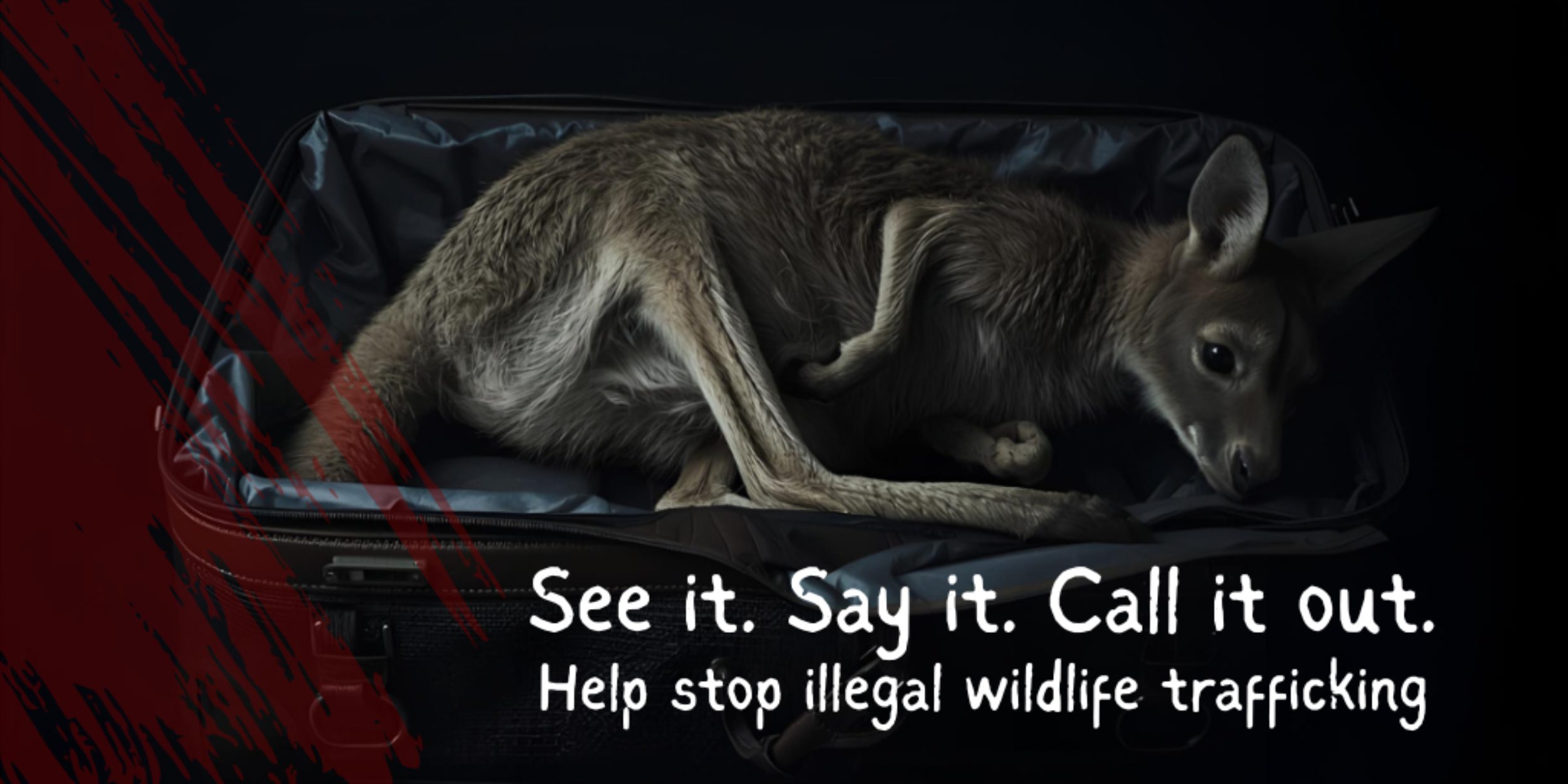
1. Community education – I like the idea of awareness raising of the issue of illegal trade. It’s important to know that awareness raising campaigns alone will not change the behaviour of those doing wrong. However, if we are to achieve further steps in tackling the problem then the public needs to understand issues, why investment in the problem is required and be on side with the need.
2. Judicial training and support – these are highly important, but I believe this must be at all three levels of the enforcement process that I previously identified. That is seeing this training and support offered through all people involved with INVESTIGATION, PROSECUTION and JUDGEMENT. If there is inadequate understanding on the scale, the risks associated with the issue and the correct procedural processes and enactment of the laws then the likelihood of changing the low-risk high return culture that exists at the criminal level will not change
3. Boosting resources and technology – boosting the use of technology is important and boosting resources possibly more so. The important part of technology change is that it must be scalable to ensure it is used widely. The deterrence factor of penalties is derived as much from their repeated application as it is from harshness. If we are to argue for harsher penalties we should as equally argue for repeated application. If technology is to be successful it must be possible to roll it out widely to increase the repeatability of detection on a broad scale.
4. Harmonising national laws – undoubtedly this is true and we must ensure that any conviction in one jurisdiction is known in another as a matter of course. In a paper looking at the global fight against illegal wildlife trafficking (IWT) – the conclusion starts, “Ensuring that penalties are both dissuasive and proportionate to the gravity and scale of the crime, while harmonizing sanctions and enforcement practices across borders, is critical to combating IWT.” These comments stand as true for harmonisation of the Australian domestic legal system as they do for the global one!
And then I would add one more.
5. Supporting a review of CITES – I have for a number of years now advocated for a review of the CITES. Chronically unfunded and only slowly being dragged into the digital world with e-permitting, CITES is long overdue for review. Key to this going forward will be the consideration of adopting the precautionary principle and moving to a Reverse Listing model (first proposed by Australia back in 1981!). At Nature Needs More we have proposed a model for adopting a reverse listing approach to ALL trade in wild species; the starting point could be the trade in live species including for the exotic pet trade. The reversal of CITES trade to a policy of no trade unless it can be managed in such a way to be sustainable, legal and safe (Target 5 of the KMGBF) would automatically provide protection to all our native species not currently listed under CITES as a default on a global basis. We cannot fully tackle illegal trade until we have a substantially better managed and simplified system of legal trade for the world. A reverse listed trade system would seem a much stronger position for Australia to be in if we are genuinely interested in protecting our unique biodiversity.
In a recently published book, Green Crime: Inside the Minds of the People Destroying the Planet, and How to Stop Them, the author, criminal psychologist Dr. Julia Shaw, forensically analyses what she calls the six psychological pillars of those involved in environmentally damaging activities: ease, impunity, greed, rationalization, conformity, and desperation.
Certainly, “ease”, “impunity”, “greed”, “rationalisation” can describe those involved in wildlife crime in Australia. It is now up to our systems and institutions to start dealing with the fact that most Australians don’t want this needless, self-indulgent global trade of our unique and highly precious native fauna. It’s time for education, investment and a stronger message from the courts.
In short, it’s time to tip the scales of justice in favour of our wildlife!